Apo Whang‑Od, is the 108‑year‑old tattoo artist of Buscalan, Kalinga — the last and oldest living mambabatok, a practitioner of the ancient Kalinga art of batok. She is tiny, sharp‑eyed, and carries herself with the quiet authority of someone who has lived through every story the mountains have whispered.
She tattoos using the traditional hand‑tapping method: a thorn from a pomelo or calamansi tree, charcoal soot for ink, and a bamboo stick to tap the design into the skin. For generations, she tattooed warriors and women — bravery for men, beauty and identity for women.
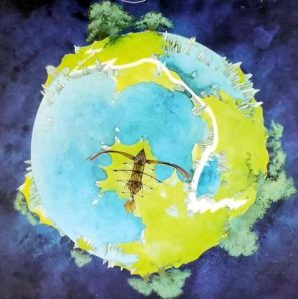
Her fame spread globally in the last two decades, eventually placing her on the April 2023 cover of Vogue Philippines, making her the oldest person ever to appear on a Vogue cover. In 2018, she received the Dangal ng Haraya Award for preserving this indigenous art.
Image: Vogue Philippines, April 2023 cover
Why She Mostly Does Three Dots Now
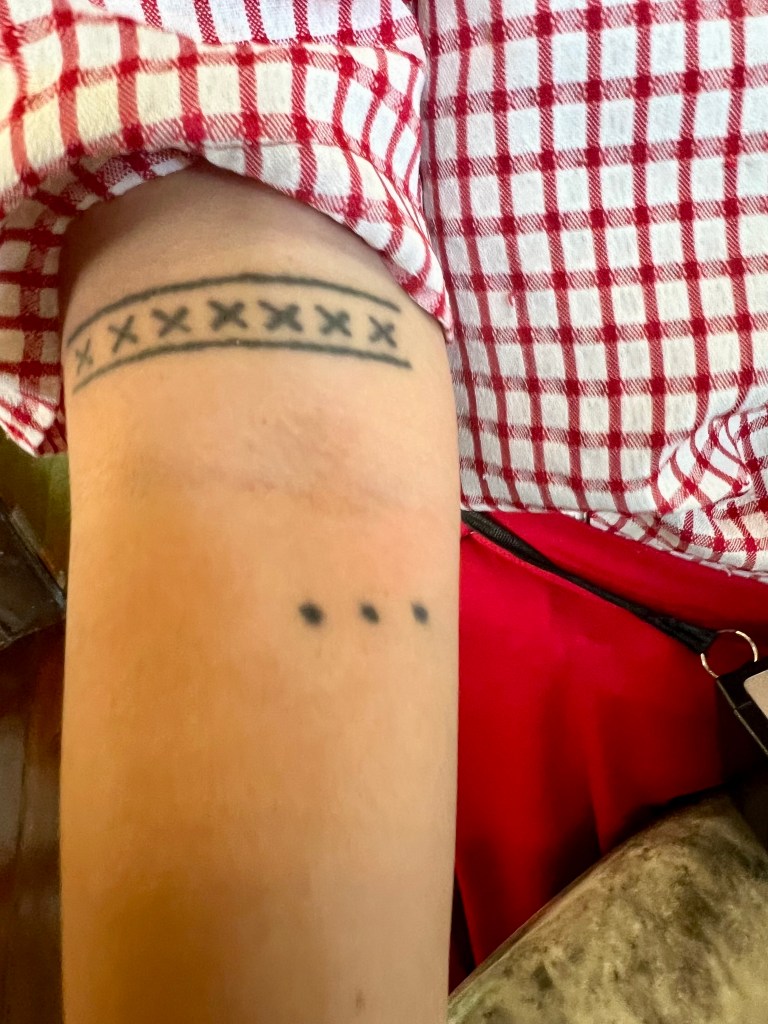
Because of her age and the overwhelming number of visitors who travel to Buscalan, Whang‑Od now typically gives her signature three‑dot tattoo.
The three dots represent:
Her
Her lineage
Her grandnieces, who now carry the tradition forward
It’s her way of blessing visitors while keeping the practice sustainable — a simple mark that still carries the weight of a thousand years of Kalinga tradition.
Our Story
Not that I wanted a tattoo, but I thought it would be neat to meet Whang‑Od. Prior to leaving home, both Rica and I researched how to get to her, and every bit of information on the internet said the same thing: you had to survive a long, punishing mountain hike to reach her village. Even YouTube showed people gasping their way up steep trails like it was some kind of endurance test.
Then, at Las Casas, Rica quietly noticed our guide’s arm — three perfect dots — and she told us they drove as far as they could and then walked just ten minutes. In that moment, we both felt it: we’d been so close. We could have done it easily when we were in Banaue, and the chance had already slipped past us.
When Ronald’s chapter closed with a goodbye, it also took Ryzen’s smile with him.
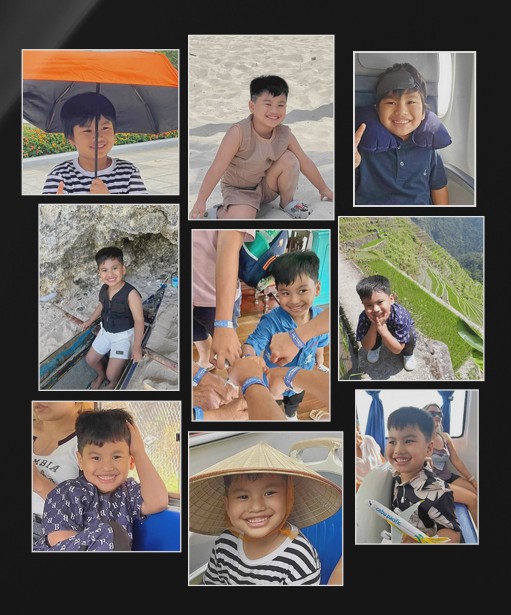
Ryzen is five years old and was with us the whole trip, and he has the best smile ever — not the forced kind kids give when adults beg them to “smile for the camera,” but the real thing — bright, effortless, and ready at a moment’s notice. He doesn’t warm up to the camera. He arrives warmed up.
He was also the easiest traveler in the van. Long drives through mountains, winding roads, hours between stops — not once did he ask “Are we there yet.” Not once. As long as he had a little internet and cartoons playing on his mother’s phone, he was perfectly content, perfectly patient, perfectly Ryzen.
And the moment someone said “One, two, three…” he lit up like he’d been waiting for that cue all day. Every single time. No retakes needed. No coaxing. No bribery with snacks.
Some kids pose. Ryzen performs. Some kids smile. Ryzen beams. Some kids get tired. Ryzen keeps going, steady as an Eveready battery.
If Hollywood ever needs a five‑year‑old with perfect timing, a natural sense of light, and a grin that could carry a whole movie poster, we know exactly who has that Hollywood‑ready charm.
Saturday morning begins the same way the others have — breakfast, coffee, everyone moving around the house in that familiar rhythm we’ve settled into. But underneath it all is a different kind of energy. While the rest of us ease into the day, Ronald and Ella are quietly preparing for their trip back to Singapore. It’s their last full day with us, and we all feel it.
Before this trip even begins, the three of us — Ronald, Ella, and I — spend countless hours on FaceTime trying to piece everything together. They’re in Singapore, I’m in the U.S., and the only time we can talk is after Ronald gets off work. That means I’m the one awake at one or two in the morning, waiting for his call so we can go over routes, hotels, schedules, and all the little details that make a trip like this possible. Sometimes Ryzen pops in, curious and full of energy, adding his own charm to the planning sessions.
Those late‑night calls become part of the heartbeat of this journey. Ronald uses all of his vacation time for the entire year just to be with us — something I will always be grateful for. He doesn’t have to, but he does, without hesitation.
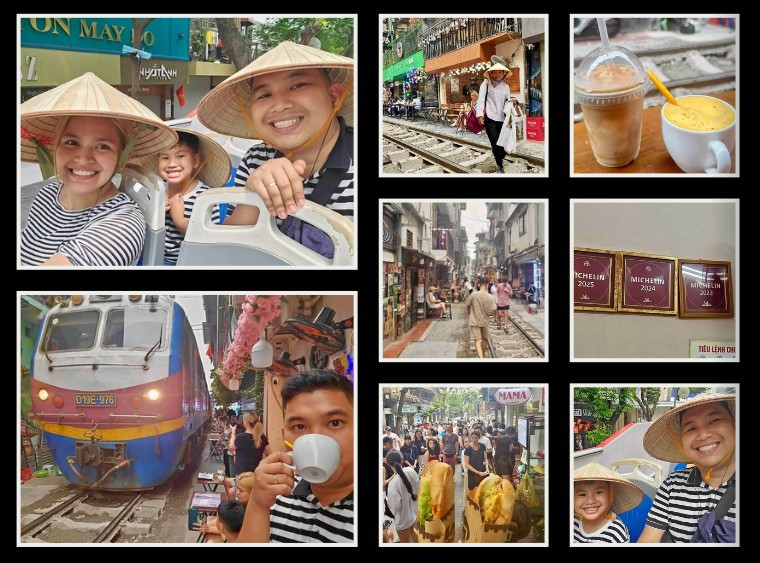
Their flight isn’t until early Sunday morning — 5 AM — but because it’s international, they need to be at the airport three hours before. That means leaving the house around 10:30 PM on Saturday night. The flight itself is only about two and a half hours, but they have a full 32‑hour layover in Vietnam before the final leg home. Ella has never been to Vietnam, so she’s actually excited about the stopover. They already have a full plan mapped out — hitting as many Michelin‑star restaurants as possible and turning that 32‑hour layover into a little adventure of their own.
We spend most of Saturday out and about, shopping for the things they want to bring back to Singapore — the little items you can’t easily find there, the things that feel like home. It’s practical and ordinary, yet somehow emotional. Every store we walk into, every item they pick up, is a reminder that their time with us is running out.
The day moves slowly, the way days do when you’re trying to hold onto them. We talk, we rest, we try to pretend it’s just another day. But every so often, one of us glances at the clock, silently counting down to the moment they’ll be gone.
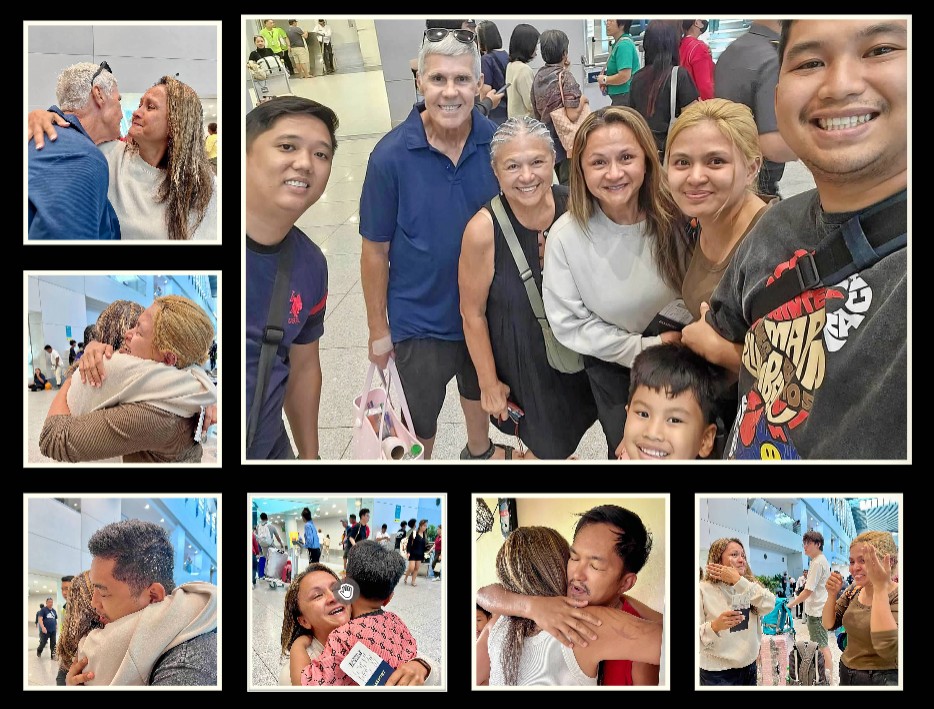
When it’s finally time for them to leave, the goodbyes come in waves — hugs that linger, eyes that fill faster than anyone expects, and that familiar tightness in the throat that comes when you’re trying to be strong for each other.
Because they have to leave so late at night, we don’t go to the airport with them. Instead, Ella’s family — her sister, brother‑in‑law, and two nephews — take them. When they walk out the door, the house falls quiet in a way that feels unfamiliar. The group feels smaller already, even though they’ve only just left. We don’t know when we’ll see them again. All we know is we’re hoping it won’t take another six years.
A 32‑hour layover, a 32‑hour feast. Vietnam turns waiting into an adventure
I wanted to be in Olongapo for this part of the trip so Jay could experience how Holy Week is observed in the Philippines. Good Friday here isn’t just remembered — it’s lived. It moves through the streets, through the voices, through the devotion of the people who carry these traditions year after year.
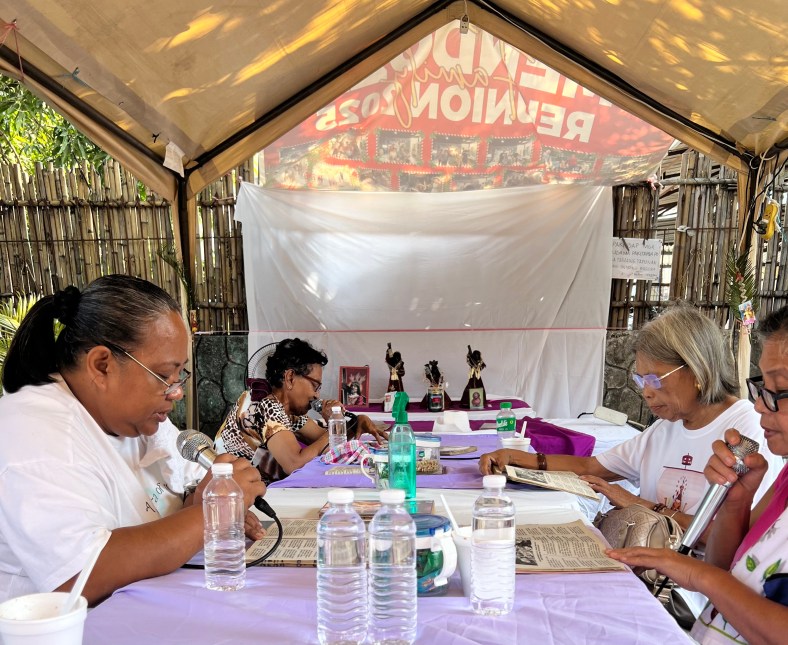
Jay witnessed the pabasa — the continuous singing of the Bible that begins on Holy Thursday and must be completed by 3 PM on Good Friday. The chanting fills the air in a steady, rhythmic flow, sometimes going day and night without stopping. It’s one of the most powerful expressions of devotion you can hear.
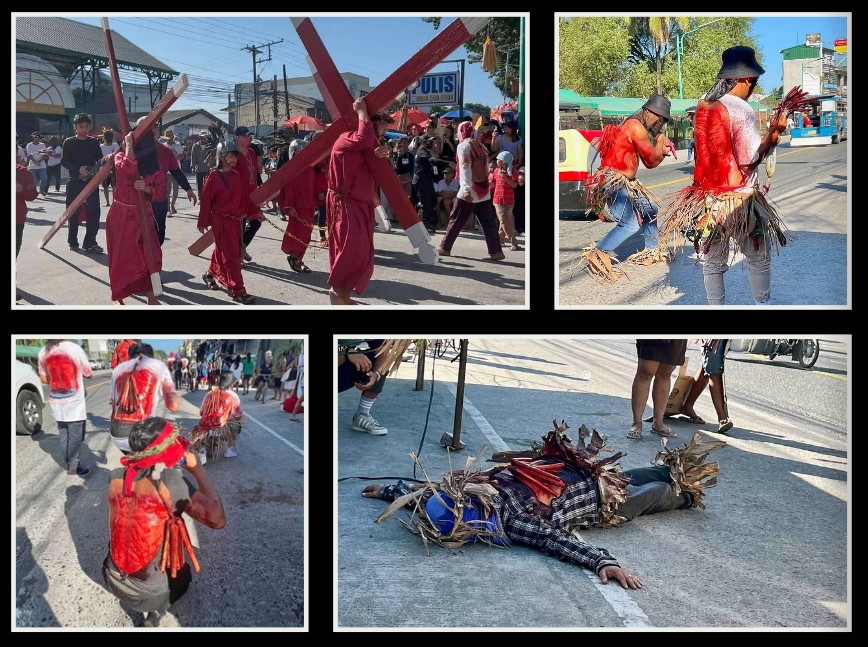
We drove to Castillejos in the morning, where the traditions are especially strong. All along the roadside, we saw people doing their penitensya — their acts of penance. Some carried heavy wooden crosses under the heat of the sun. Others practiced self‑flagellation, striking their backs as a form of devotion. And yes, the blood is real. It’s part of the ritual, part of the offering, part of the way some Filipinos choose to honor this day.
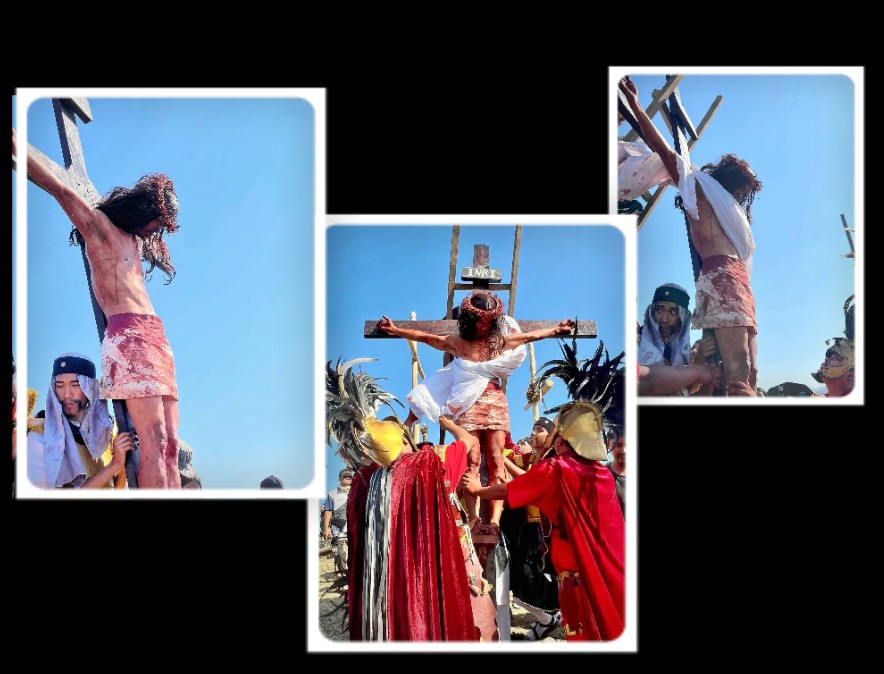
At around two o’clock, Ronald, Ella, Jay, and I headed back to Castillejos for the 3 PM crucifixion reenactment. By the time we arrived, the streets had grown quieter, the air heavier. Three o’clock is the most solemn moment of the day, when some participants are lifted onto crosses to symbolize the crucifixion. It’s powerful, unsettling, and unforgettable — the kind of moment that stays with you long after you leave.
After the ritual, we met up with the rest of the group before heading back to Olongapo. We were a big group again — a different mix of faces this time — but the feeling was the same. After witnessing something so deeply rooted in faith and tradition, it felt grounding to end the day together, each of us carrying the weight of the day in our own quiet way.
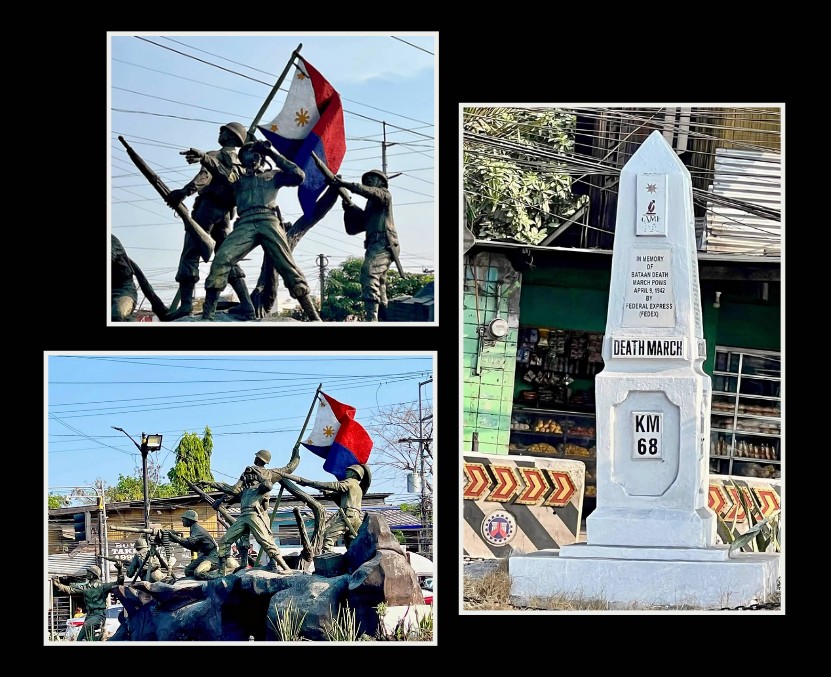
Yesterday, after we dropped Rica at the airport, we drove back to Olongapo with a quick stop in Bataan to see the Death March monument. Even though it was just a short visit, standing there made all of us pause. It’s impossible not to feel the weight of history in that place — the kind that settles quietly into you.
(The flag is flown in its wartime position, with red above blue)
When we finally reached the house, Ate Tessie and her family were still there, filling the rooms with their laughter and stories. It was comforting to come home to a full house again, even if only for one more night.
This morning, April 2, we said goodbye to them after breakfast. At this point, I’m starting to think the most important meal of the day is turning into the saddest meal of the day. Another round of hugs, another round of photos, another group heading off in a different direction.
But this goodbye felt a little lighter. After fifty years apart, we finally had time together — and this time, I have everyone’s contact information. We won’t lose touch again.
Rica left the Philippines when she was just four years old, so this trip was like seeing the country for the very first time. After fifty years away, everything was new to her — the places, the food, the rhythm of the days — and watching her take it all in made the journey even more meaningful for me. I’m truly glad she was able to join me for this trip.
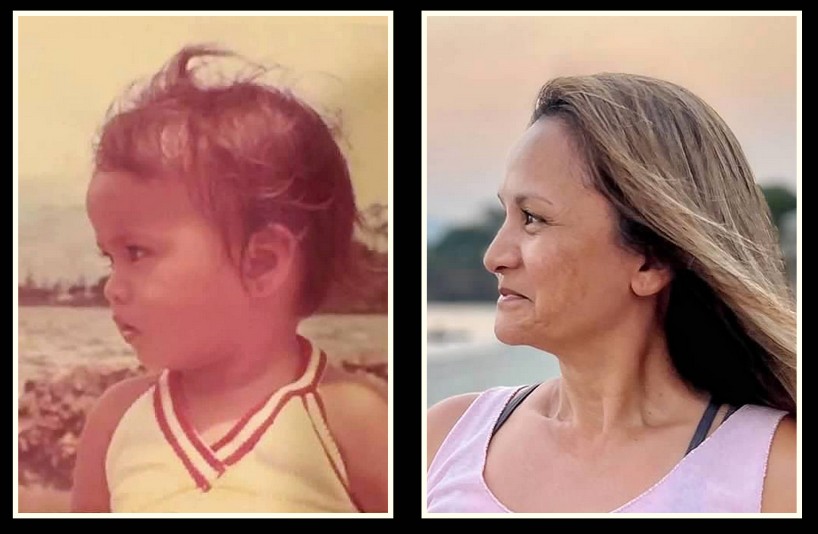
Rica at 2 years old
And then, all too soon, it was time to take her back to the airport.
We took Rica back to the airport after breakfast on April 1. The drive felt quieter than usual — partly because we were a smaller group now, just Ronald, Ella, little Ryzen, Jay, me, and Ella’s brother-in-law driving us — and partly because everyone knew what was coming. It was that soft kind of silence that settles in when no one wants to be the first to say goodbye.
When we arrived, we didn’t just drop her off at the curb — we parked, all of us walking in together like we could somehow slow the clock by staying close.
We helped her with the luggage, but we weren’t allowed inside the check‑in area for security reasons, so we stood behind the barrier and watched her move through the line by following the two bright orange suitcases inching forward. Once the last bag disappeared onto the conveyor belt, she came back outside and we all went to find a place for one last lunch together. It felt almost normal — eating, talking, pretending we weren’t counting down the minutes — but underneath it all was that familiar ache.
And then came the tears. One by one, everyone wrapped their arms around Rica, holding on a little longer than usual, whispering promises to stay in touch, to message when she landed, to plan the next trip, to meet again somewhere, someday. When it was finally time for her to go inside, none of us moved. We stayed behind the barrier, waving and waving, not wanting to leave until Rica was completely out of sight — and she kept turning back, waving right along with us, until the crowd finally swallowed her up.
The walk back to the car felt slower, quieter. Part of it was the silence, part of it was the empty space where Rica should have been, and part of it was knowing that in just four days, we would be doing this all over again. Another farewell, another round of hugs and tears, this time when Ronald, Ella, and little Ryzen would head back to Singapore. It was like the goodbyes were lining up, waiting their turn.
But even with the sadness sitting with us, we knew the next couple of weeks would be spent up north with Onieh’s family for Holy Week — a different kind of togetherness, a different kind of comfort. It would still be a good time, full of family and familiar rhythms, just with a few missing pieces from our circle.
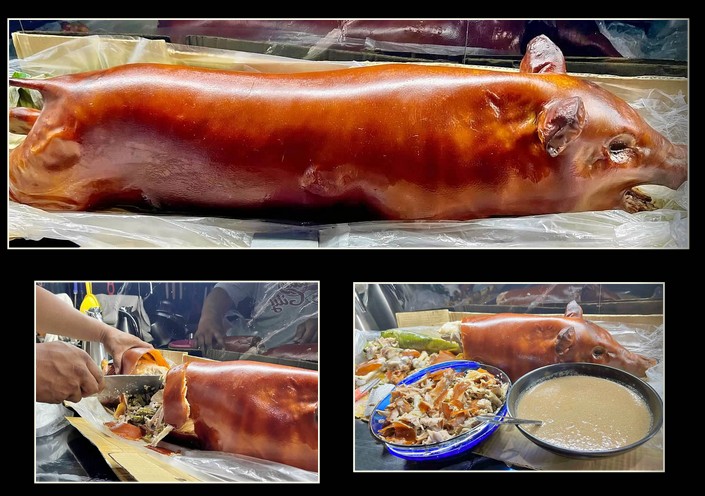
The anniversary meal turns into its own celebration. The highlight — without question — is the lechon. It arrives glistening and golden, the skin perfectly crisp, the kind that cracks when you tap it with the knife.
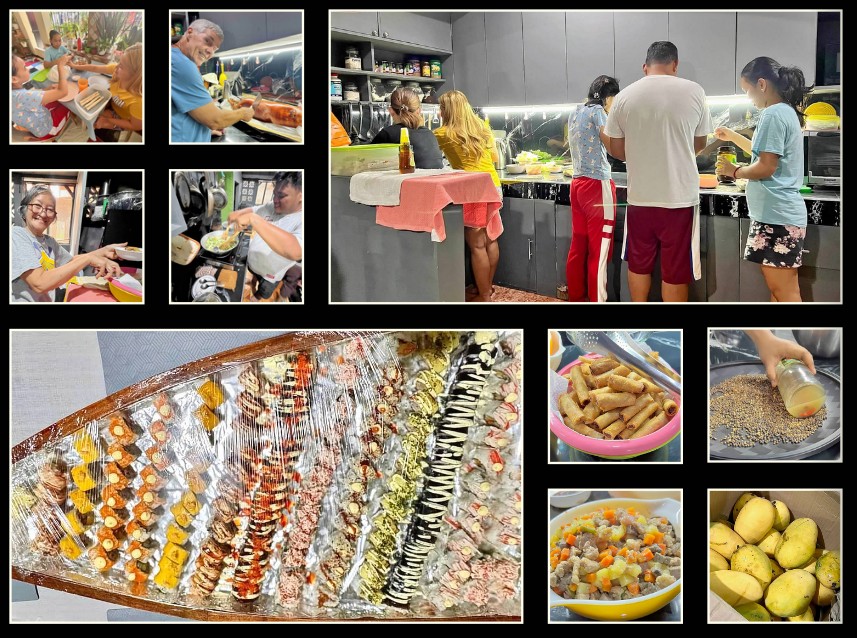
Another surprise highlight is the sushi. It feels like a lifetime ago — that 33‑day cruise where I searched for sushi every single day — and now here, in the middle of today’s festivities, sits a huge wooden “boat” overflowing with it. Rolls, sashimi, nigiri, all arranged like a little harbor of color and freshness. I can’t help but smile at the full‑circle moment.
And the food doesn’t stop there. Platters and trays keep appearing from every direction — Filipino dishes of all kinds, everyone’s favorites (especially the lumpia), plus desserts and anything anyone felt inspired to cook. It’s loud, it’s joyful, it’s chaotic in the best way. And somewhere between the lechon, the lumpia, and everything else on the table, I realized something funny: I’m positive I ate more garlic this past month than I’ve eaten in the last five years — and more than I’ll probably eat in the next ten.
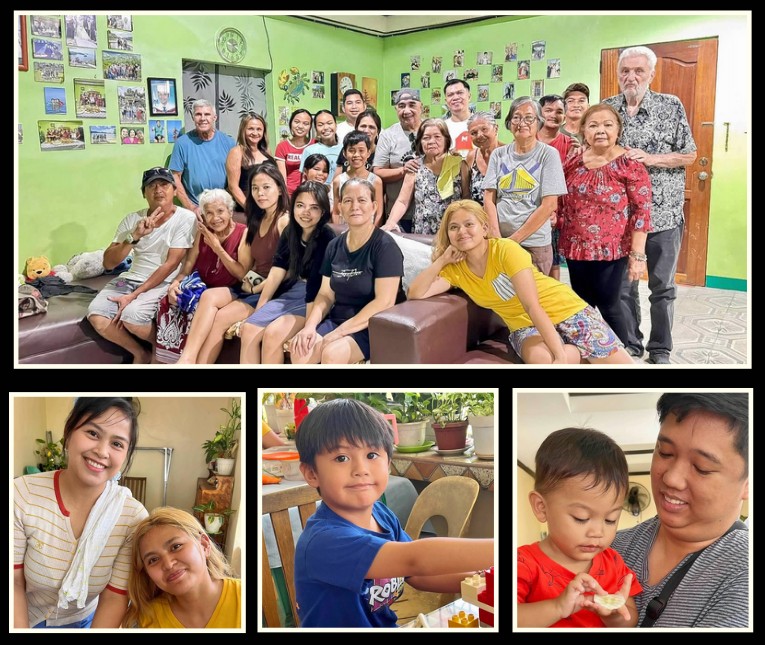
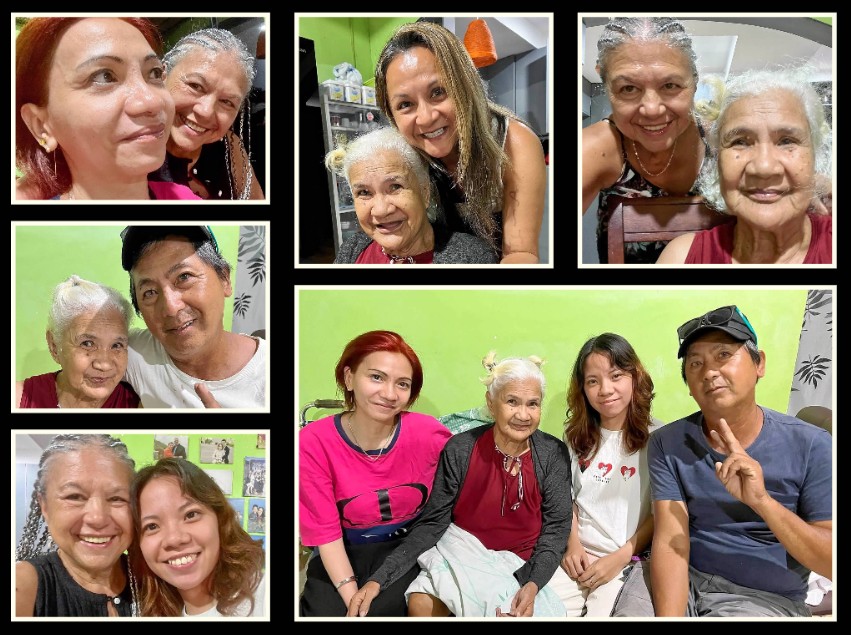
And the house is full. Ella’s family is here — her mom, her sister, her brother‑in‑law, and her nephews. Jo’s family is here too — her parents, and her brother and sister‑in‑law, their presence adding another layer of warmth to the day. And of course, Ate Tessie is here, along with her son John, her pastor, and the pastor’s two daughters — all part of the joy and noise filling the house. Rica’s godmother Susan and her husband Rodney are here as well, rounding out the circle of familiar faces. The only ones missing are Mae and Jo — but even from far away, they feel woven into this celebration.
All gathered, all talking at once, all part of this noisy, happy day — the kind of day that reminds you why you came home.
The anniversary celebration carried on long after the plates were cleared, the house still buzzing with voices and laughter. And later that night, just when we thought the day was finally settling down, Ate Tessie’s daughter Jacky and her granddaughter Angela arrived. More hugs, more stories, more catching up — the kind of late‑night reunion that stretches the day in the best possible way.
I wake up early and head to the kitchen for coffee, already anticipating Ate Tessie’s arrival later this morning. But when I turn the corner, I stop.
Instantly, I know it’s her. Of course it’s her. Ate Tessie is sitting at the head of the table, calmly drinking a cup of coffee.
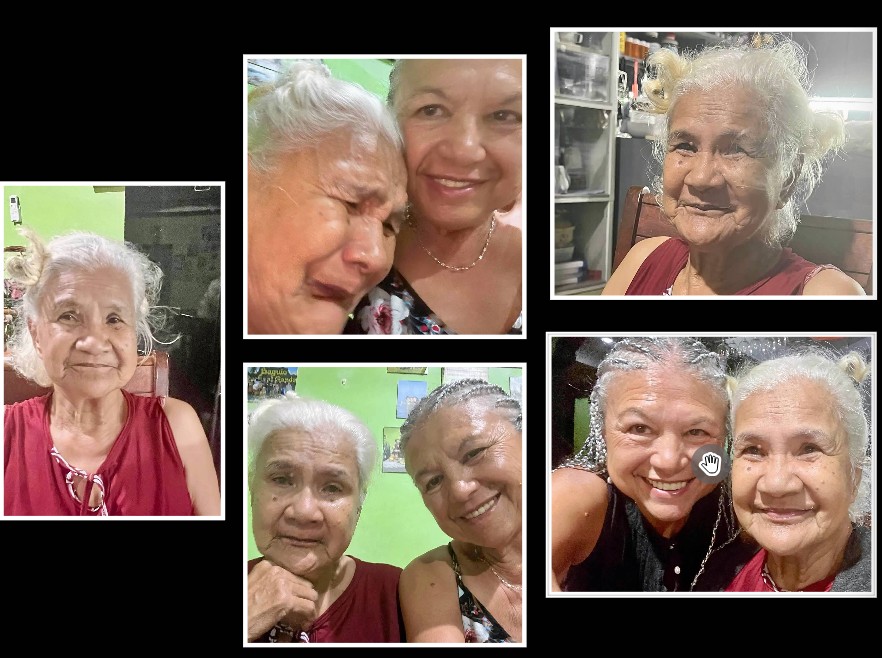
Those eyes — the same smiling eyes I would recognize anywhere. Time has changed us both in a hundred ways, but not those eyes.
I walk toward her, and we fall into each other’s arms — smiling, crying, holding on like we’re trying to make up for fifty years in a single embrace.
She isn’t supposed to arrive until 10 a.m., but here she is, already settled in as if she’s been here for hours — and she has. They arrived at 2 a.m., while I was fast asleep.
She came with her son John, her pastor, and the pastor’s two daughters — all of them traveling together to bring her to me.
And then I hear the rest of the story:
Ate Tessie and Onieh stayed up half the night watching Korean dramas, laughing, giggling, swapping stories, catching up as if they haven’t seen each other in years. The house was full of voices and excitement.
I didn’t hear a single thing. Not the arrival. Not the greetings. Not the laughter. Not even the commotion of people coming in with bags in the middle of the night. Twenty‑five years of night shift and earplugs will do that.
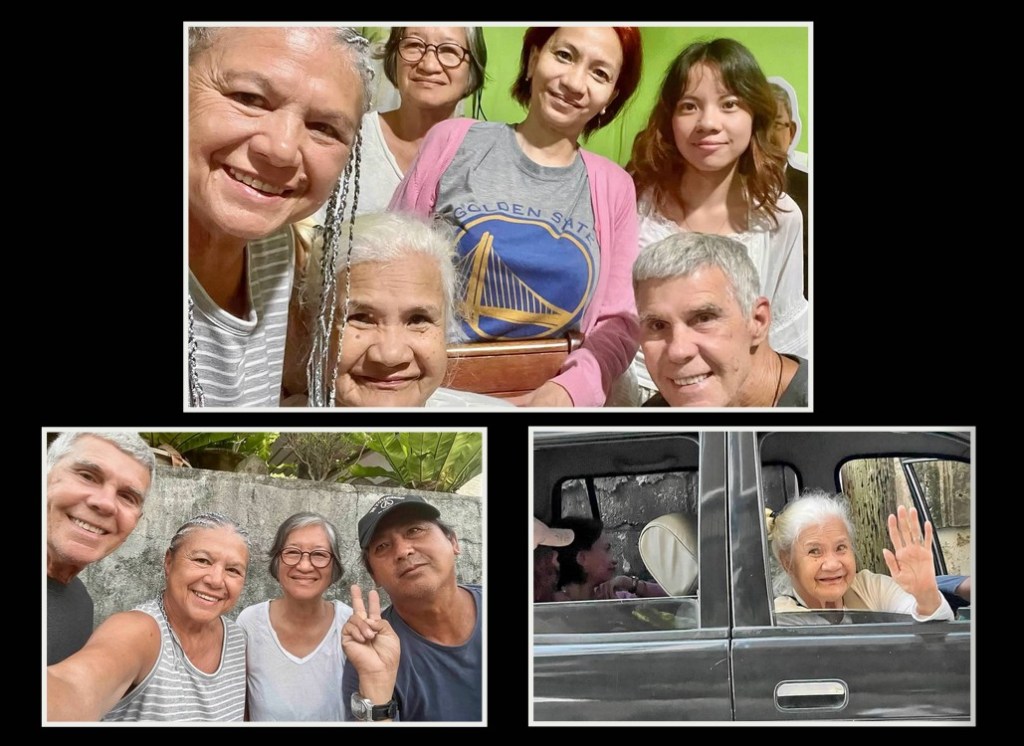
And now here she is, her eyes still smiling the way they always did
This is how March 31 begins
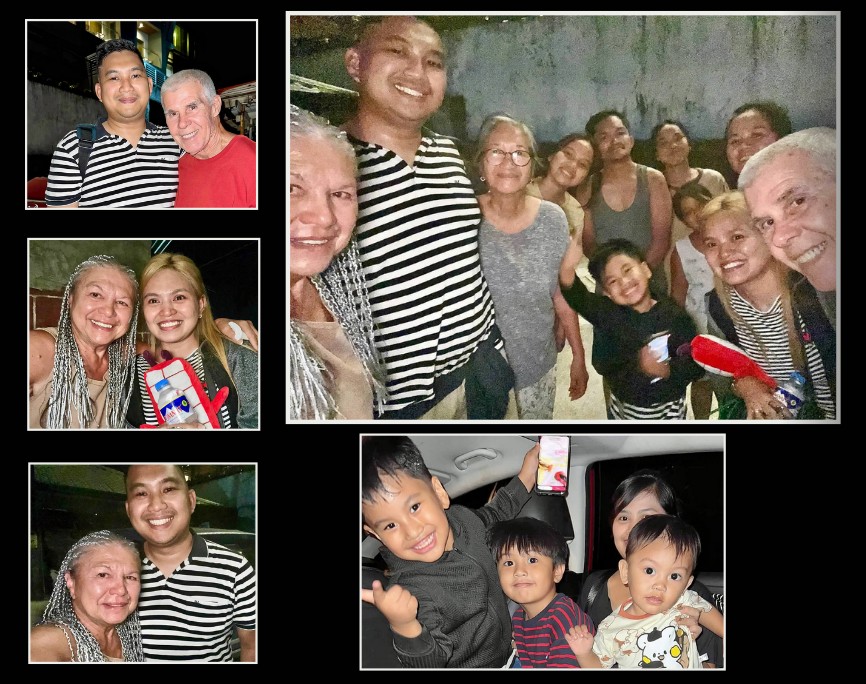
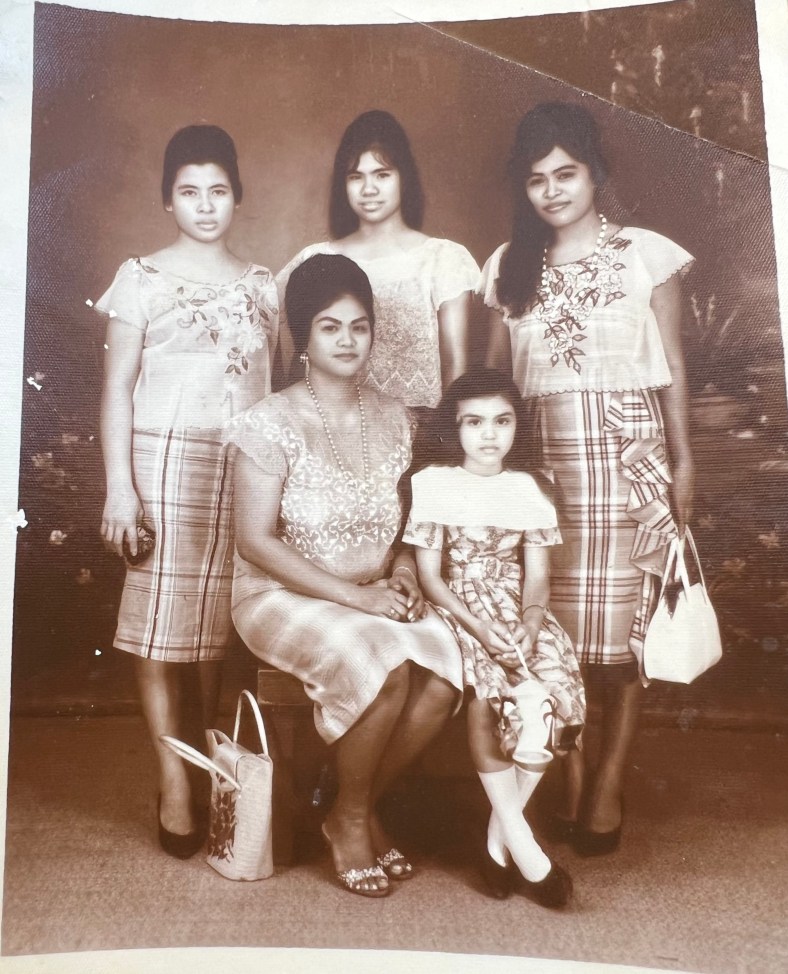
Ate Tessie stands centered in the back row. Me and my mom are in the front row.
The anniversary celebration will come later — the food, the noise, the family, the joy. But that belongs to the next chapter.
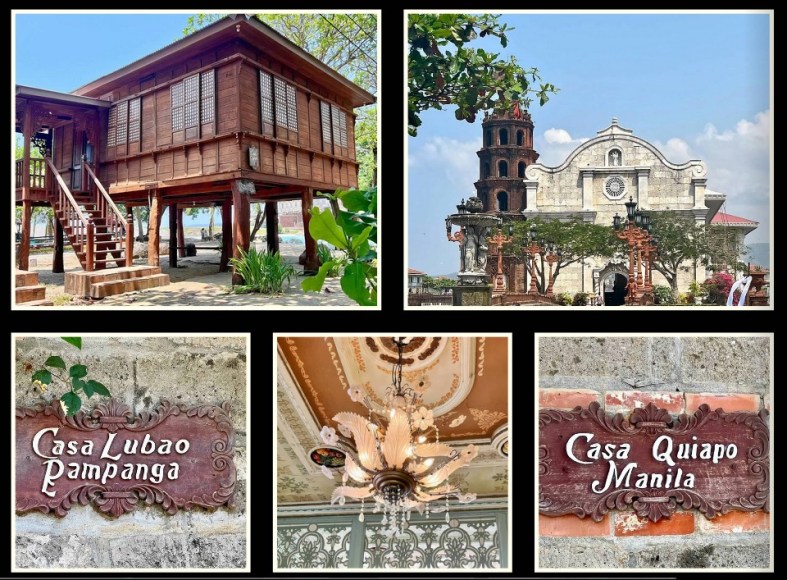
After a good night’s sleep and a breakfast made up of all the little odds and ends we’d collected along the way we headed out to spend the day at Las Casas Filipinas de Acuzar. The drive from Yas Villa took only about seven minutes — the shortest travel time of all the places we had been to on this entire journey. After so many long, winding drives through mountains and provinces, it felt almost unreal to arrive somewhere so quickly. But it also felt like a small blessing: an easy start to what we hoped would be a beautiful day.
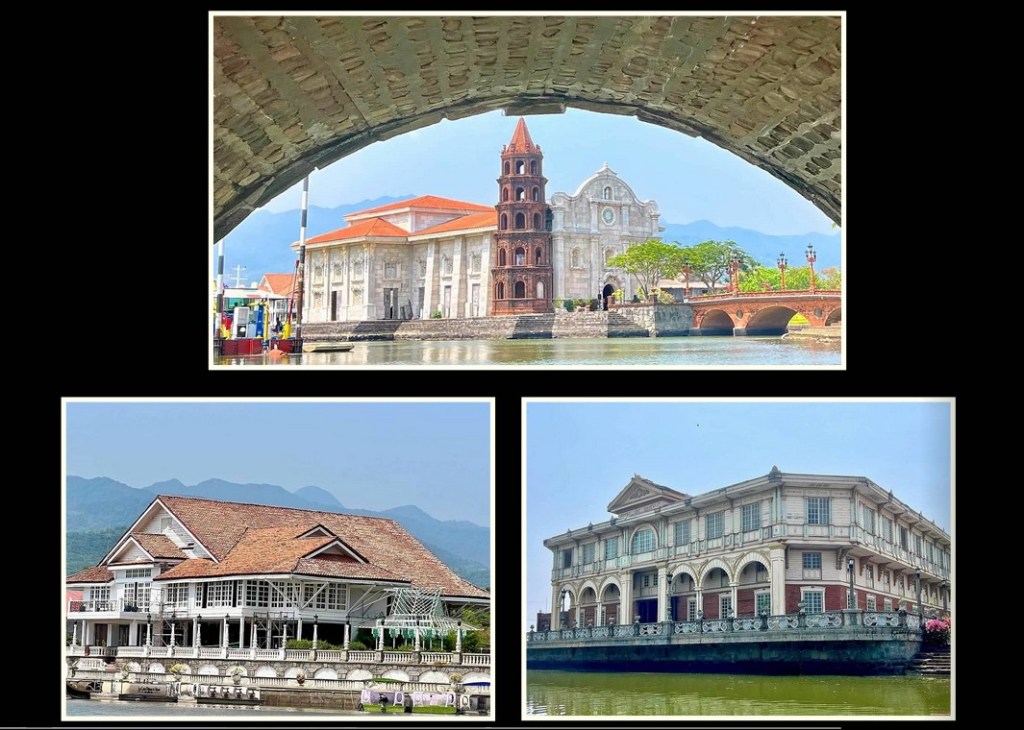
Las Casas is the kind of place that makes you slow down the moment you enter. It’s a sprawling heritage village built along the water, where Spanish‑era Filipino houses — real ancestral homes from different parts of the country — have been carefully dismantled, transported, and rebuilt piece by piece. Walking through it feels like stepping into a preserved memory: cobblestone streets, arched bridges, wide plazas, and grand wooden casas with capiz windows that glow softly in the light.
Some houses are simple and humble, the kind that once belonged to families who lived quiet, hardworking lives. Others are ornate, with carved details and wide verandas that hint at the wealth and stories of the people who once lived inside them. Everywhere you look, there’s a sense of history — not in a museum way, but in a lived‑in, breathing way, as if the past is still lingering in the corners.
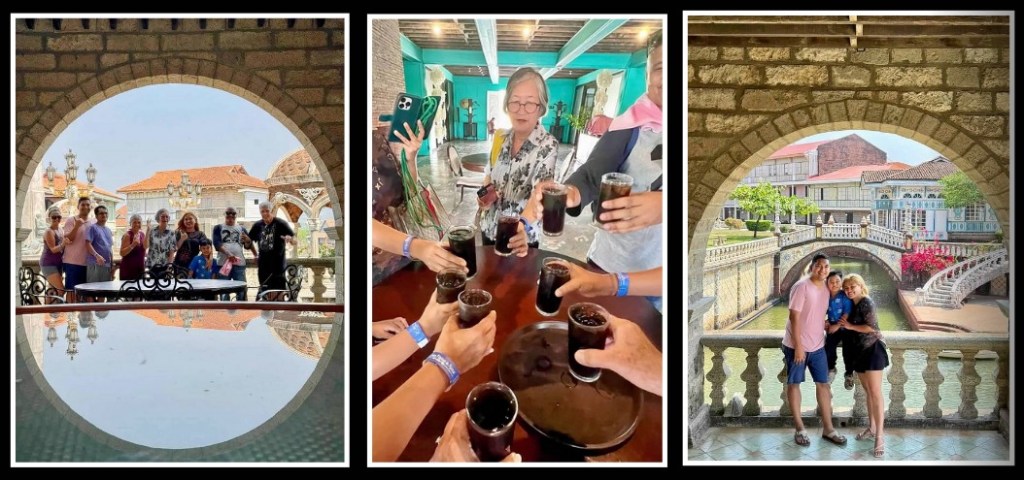
We joined a guided tour, which helped bring the place to life even more. Our guide shared stories about each house — where it came from, who lived there, how it was moved, and what parts were original. Some of the tales were heartbreaking, others inspiring, and a few were downright surprising. It felt like walking through a timeline of Filipino life, architecture, and resilience.
By lunchtime, we’re ready for a break — and honestly, ready for something not Filipino for once. The whole family has been spoiling me with all my favorite dishes since we arrived, so an Italian restaurant sounds like the perfect treat for all. We’re already dreaming of pasta, pizza, maybe even a salad.
Then the food comes out… and it’s Filipino.
It’s not bad at all — just not what any of us expected, and that’s travel for you: even lunch likes to keep us on our toes, those little mismatches that end up becoming part of the story.
After lunch, we took the boat ride, which turned out to be one of the highlights of the day. The boat glided along the canal, the casas looked even more majestic from that angle — their reflections shimmering on the surface like scenes from an old Filipino film. The ride gave us a different perspective of the village, almost as if we were drifting through time.
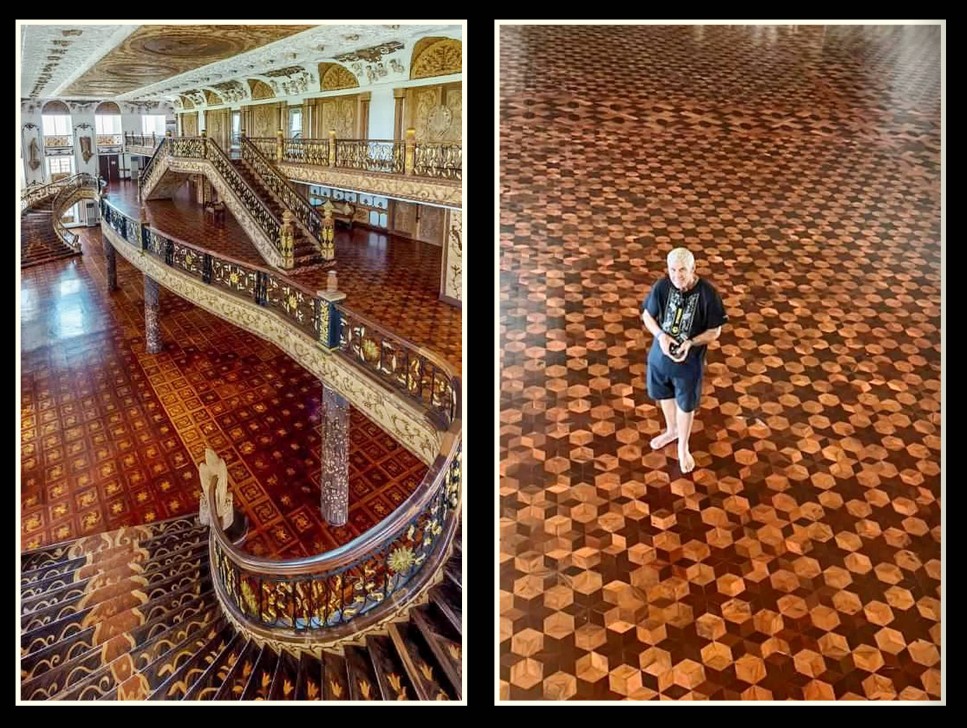
We got off at one of the most beautiful houses along the route, and the moment we stepped inside, we were all amazed. The intricacy of the architecture was breathtaking — carved wooden panels, sweeping staircases, capiz windows that filtered the light in a soft, pearly glow. Every corner had a detail that made you pause: floral motifs etched into balustrades, hand‑painted ceilings, antique furniture that looked like it had been waiting for visitors for decades.
As the day goes on, it hits me: this is the last day we are all together as a complete group. After nearly a month of shared roads, shared meals, and shared discoveries, this is our final adventure with everyone still by my side.
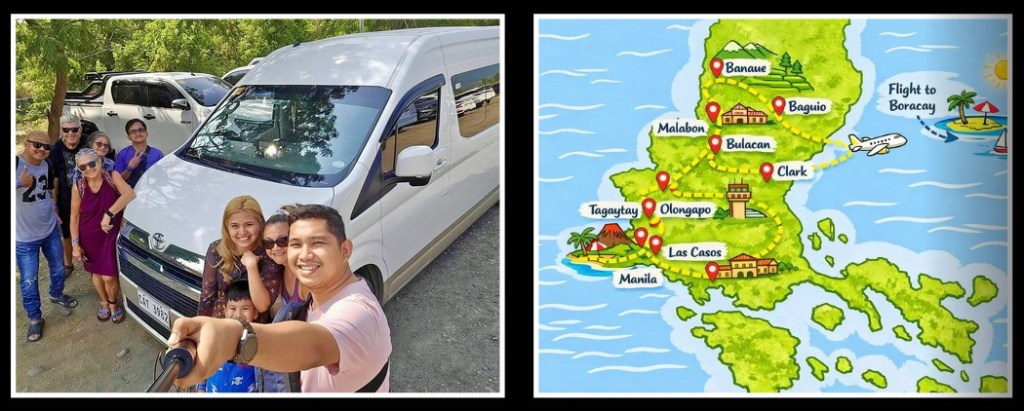
Our journey quietly traces a long, looping arc across Luzon — from Manila to Tagaytay, through Malabon and Bulacan, west to Olongapo, then up to Clark for the flight that carries us to Boracay, before heading back to Olongapo for some rest. From there, we go on to Baguio and Banaue, circling back through Las Casas and finally returning once more to Olongapo. Altogether, we cover roughly 1,480 to 1,720 kilometers (about 920 to 1,070 miles) — a stretch of road piloted with good humor and steady hands by Obet, our ever‑patient captain at the wheel. The van carries all of us faithfully, packed with laughter, snacks, and Buddy on the parts of the journey he is able to join. Looking back — even as we’re still in it — it isn’t just the distance that matters, but how every kilometer stitches together the people, places, and moments that make this homecoming feel complete.
Later today, we head back to Olongapo, and the house will fill again with the familiar rhythm of family. But the mood is already shifting — a gentle turn toward goodbyes.
Rica starts packing tonight, getting ready for her flight back to the USA on April 1. I can already feel the weight of that approaching moment, the way a mother senses a goodbye long before it happens. She has been with us through every stop, every detour, every reunion. The thought of her leaving makes the day feel even more precious.
And tomorrow, March 31, is a full celebration at the house — a lively, joyful gathering for Ella and Ronald’s anniversary. Their actual anniversary is on April 17, but with everyone together now, it feels right to celebrate early. Family from all sides are coming, turning the house into a true reunion — noisy, warm, overflowing with stories and food and laughter.
But the most exciting part of tomorrow is Ate Tessie.
Her son John, whom we met in Bulacan a few weeks ago, is bringing her to the house in Olongapo. They’re expected around 10 a.m., and I can hardly believe it. The idea of seeing her again after fifty years — of hugging her, of hearing her voice — feels almost unreal. So as we walk through the last few casas, taking in the carved woodwork and the soft glow of the capiz windows, I hold onto the moment: the beauty of the place, the warmth of the day, the presence of everyone still together, just for now.
Because tomorrow brings celebration. And the next day brings goodbyes. And today — today is our last day as one complete circle.
We left the beautiful Baguio lodging this morning with one simple hope: to arrive early enough at our next place to enjoy the pool. After days of long drives, detours, and late arrivals, the idea of slipping into perfectly warm water felt like the reward we all needed. We chose a place in Bagac, Bataan because of its proximity to our destination the next day — Las Casas Filipinas de Acuzar, a heritage village where Spanish‑era Filipino houses have been carefully restored and rebuilt. It’s a place that feels like time paused: cobblestone streets, grand wooden homes transported from all over the Philippines, and architecture that looks like a living postcard from another era.
Before we even left Baguio, I received a message from Yas Villa letting me know that the caretakers, Laine and Doven, would be waiting for our arrival. That small gesture — knowing someone was expecting us — made the long drive feel a little lighter. After so many days of arriving late, tired, and hungry, it felt comforting to know that two people were already preparing to welcome us.
But first — breakfast.
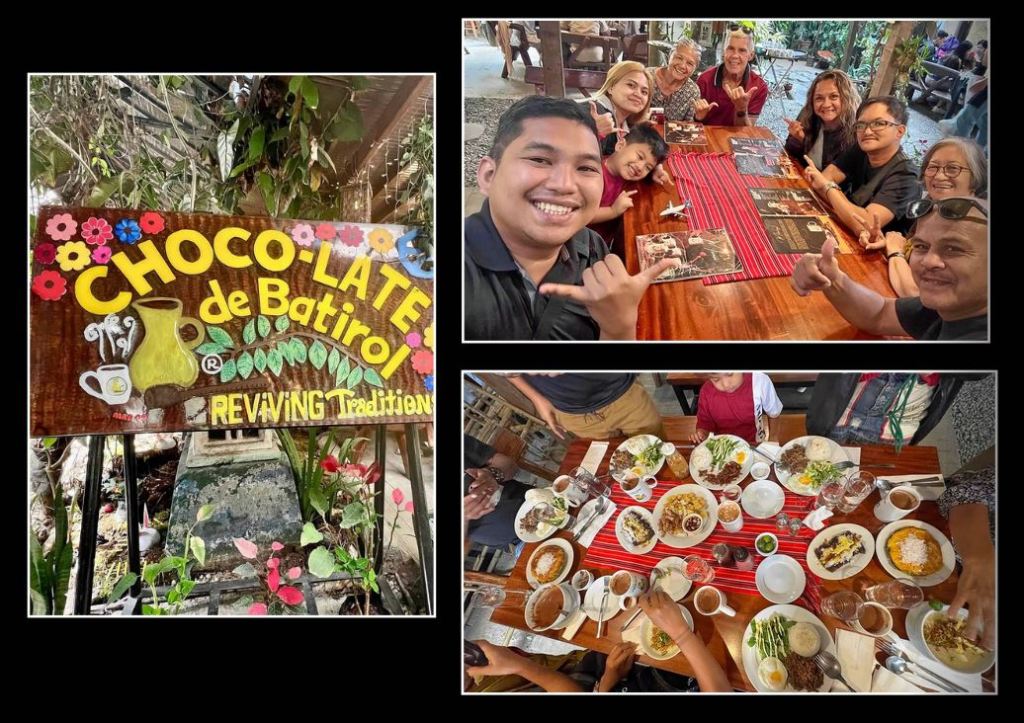
We headed to Choco‑late de Batirol inside Camp John Hay. After the long, unexpected detour the day before, sitting down with a hot batirol chocolate felt like the perfect reset — thick, warm, and comforting in a way only Baguio mornings can be. We ordered our favorites, passed plates around the table, and let the slow, easy morning settle in before starting the day.
After eating, we drove around Baguio for a bit. We made a quick stop for some shopping, and that’s when Ella found the crocheted headbands — soft, colorful, handmade-looking pieces that instantly caught her eye. She picked one for Rica, one for herself, and one for me. Ella helped me slip it on, and I couldn’t help laughing; it felt like stepping straight back into the hippie days.
Baguio has always had its own personality — the cool climate, the mountain air, and the way it grows things the rest of the Philippines can’t. Strawberries, lettuce, and crisp greens thrive here, the kind you never see in the lowlands. Even the markets feel different: piles of fresh produce, woven crafts, and rows of those iconic Baguio house brooms. Every household seems to have one, and somehow they sweep better than any broom you buy anywhere else.
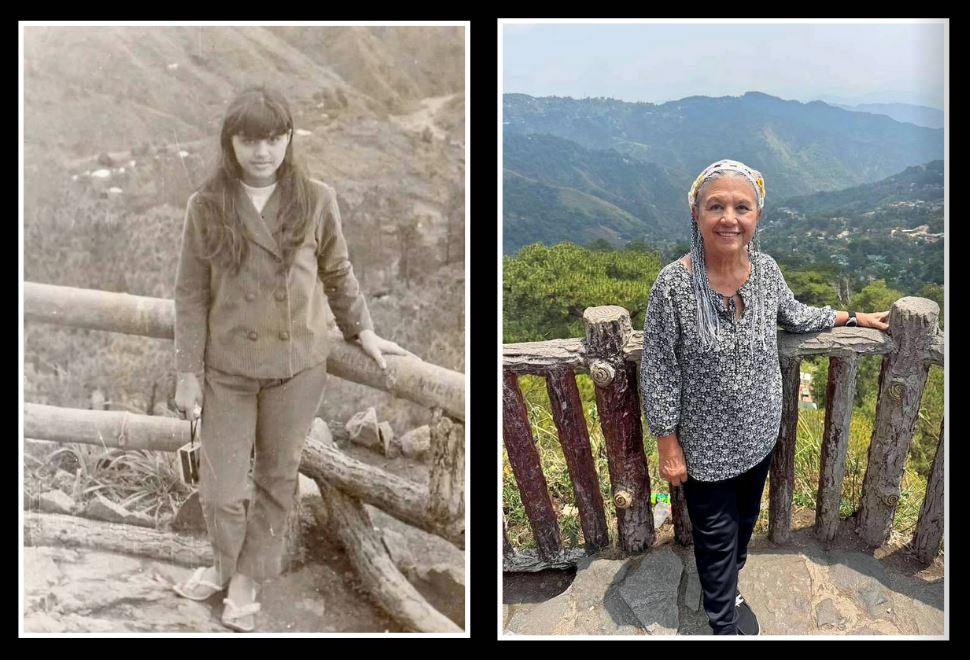
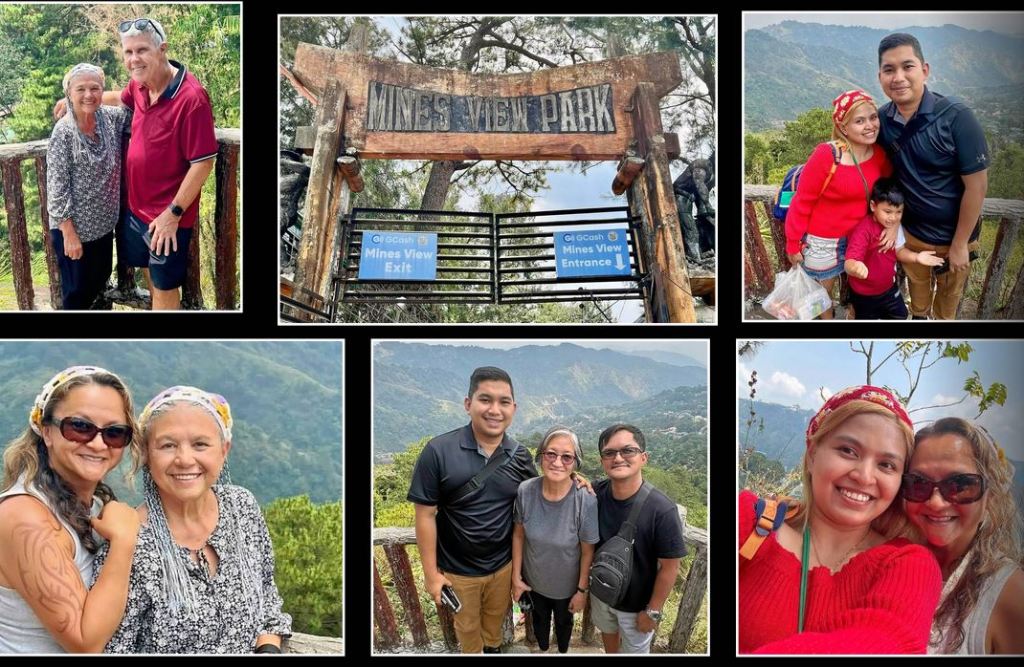
Then we headed to Mines View, where I stood in the same spot where a photo of me had been taken almost sixty years ago. Everyone tried to figure out the exact angle — the railing, the backdrop, the line of mountains — but the landscape had clearly changed over the years. New trees had grown, old ones had disappeared, and the view had shifted in subtle ways only time can create.
Still, standing there felt like touching two versions of myself at once — the young girl who once stood in that spot, and the woman who had finally come home to meet her again.
Only after all that did we finally start the long drive toward Bataan — and in true fashion, we didn’t actually get on the road until 1 p.m.
The zigzag descent out of Baguio was familiar by now, and we made our first stop at the Lion’s Head, just as we had on the way in. Another scoop of ube ice cream — because at this point, it was tradition.
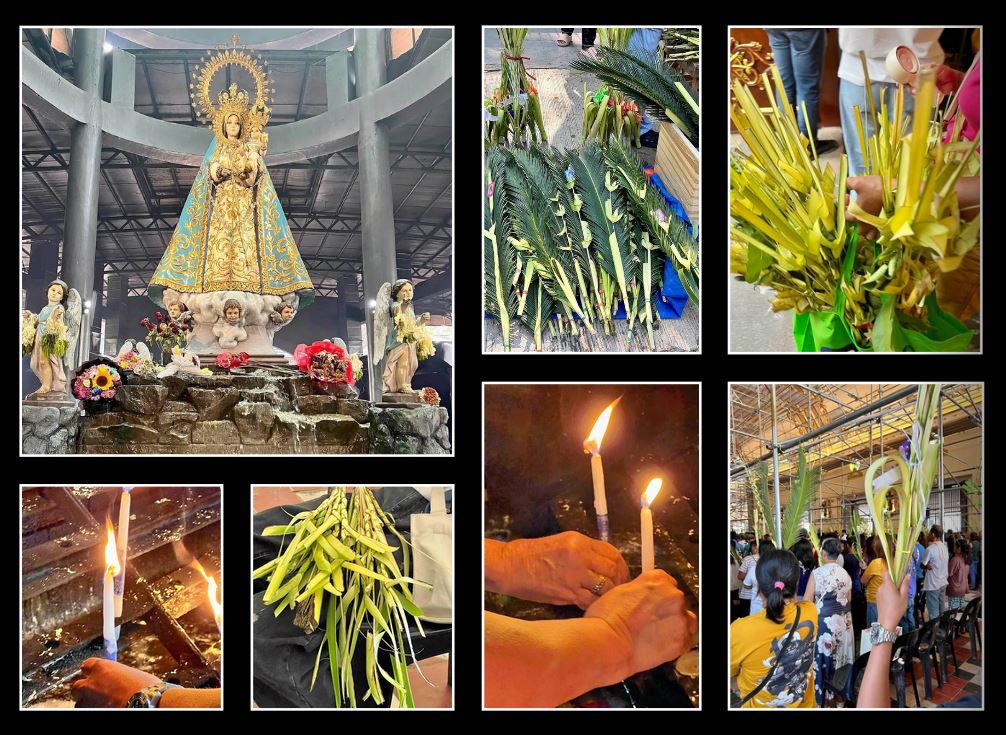
From there, we continued down the mountain and made a meaningful stop at Manaoag to have our palm blessed for Palm Sunday. The church — the Minor Basilica of Our Lady of the Rosary of Manaoag — rose up like a quiet landmark of faith, its cream-colored façade warm in the afternoon light. Inside, the air felt still and reverent, filled with soft prayers and the scent of candles. Even with the crowds, there was a sense of calm, as if everyone who entered carried their hopes gently in their hands. It felt grounding to pause there in the middle of a day that was otherwise all motion.
We didn’t stop for a formal lunch — we had enough snacks in the van to feed a small barangay — so the drive continued, winding through towns and highways until the sun began to dip again.
And, just like all our other adventures, we arrived late.
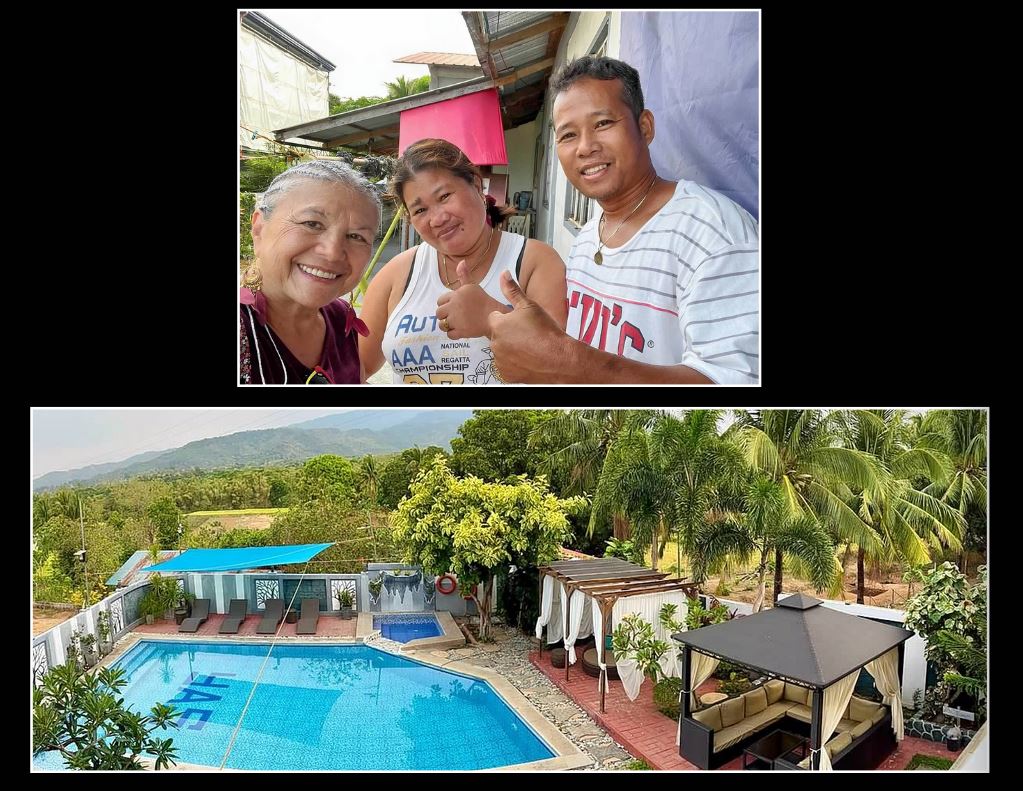
Our place for the night was Yas Villa, tucked away and quiet. It wasn’t as beautiful or as polished as Whyte Payne Transient House, but the people more than made up for it. Their warmth was immediate, genuine, and effortless — the kind of hospitality that stays with you long after the trip ends.
When we finally arrived, tired and hungry, I asked about breakfast for the next morning. Laine asked what time I wanted it, and I jokingly said, “What about now?” She didn’t even blink. She simply turned around and said she would prepare it right then and there.
That moment said everything about the place — simple, humble, and full of heart.
After settling in, some of us still slipped into the pool, which was perfectly warm and exactly what we had hoped for earlier in the day. Even with the late arrival, that small moment of floating under the night sky felt like a gift.
Tomorrow, we continue to Las Casas Filipinas de Acuzar, the final stretch of our journey together.