Arrival at Hundred Islands Guest House & Gardens
We arrived at Hundred Islands Guest House & Gardens to find Robin and Nora — along with their entire staff — waiting to greet us. It wasn’t formal or stiff; it felt like stepping into a place where people had genuinely been looking forward to our arrival. Their smiles, the easy warmth, the way they welcomed us by name — it set the tone before we even stepped inside.

And then there were the cats — not wandering freely, but resting in beautifully crafted outdoor enclosures that let them enjoy the sun and the garden without roaming. The cages were so thoughtfully built, making them look more like art than containment.
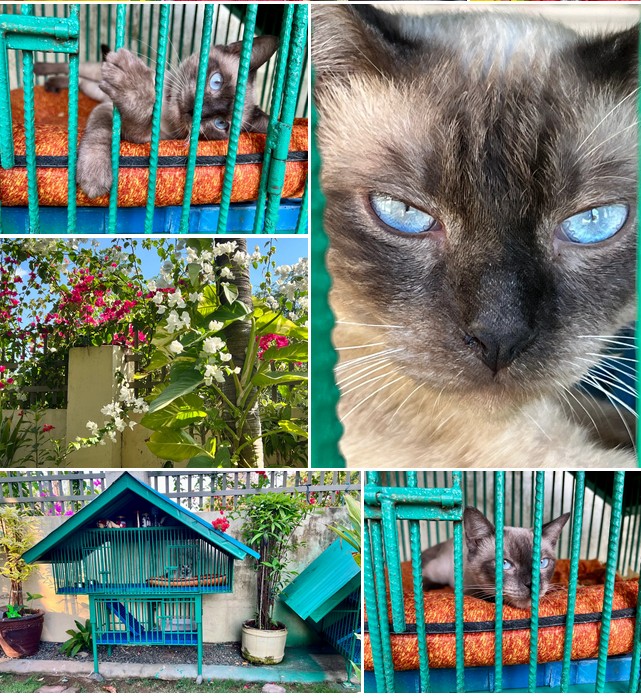
The first thing that came to mind was that I needed to show our friend Rob a photo of these enclosures so he could build something similar for our kitties back home. It was exactly the kind of clever, cozy setup he’d appreciate.
Hundred Islands — What It Is and What You Can See
The Hundred Islands National Park in Alaminos was formed millions of years ago, when ancient coral reefs rose above the water as sea levels changed. Over time, waves and weather carved the limestone into the rounded shapes seen today. At low tide, there are 123 islands, and at high tide, 124, scattered across the Lingayen Gulf like small green domes.
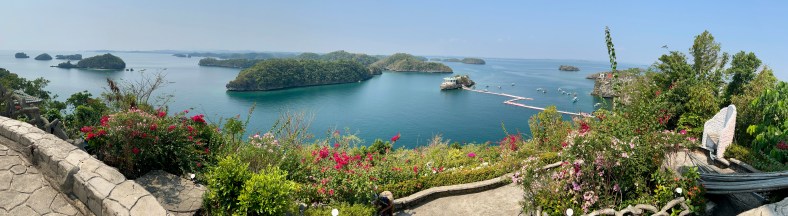
From the boat, the islands vary in size and shape — some steep and rocky, others soft and rounded, and a few with small beaches tucked into their edges. The water shifts from deep blue to turquoise, and in the shallows you can see coral, rocks, and small fish moving beneath the surface.
Hundred Islands is one of those places that shows the Philippines exactly as it is — bright, warm, natural, and full of life. Everywhere you look, there is something uniquely Filipino: families swimming, fishermen passing by in their small boats, and the quiet rhythm of the province shaping the day.
Main Islands and Landmarks
- Governor’s Island — known for its high viewpoint overlooking the entire park.
- Quezon Island — popular for swimming, picnic huts, and sandy areas.
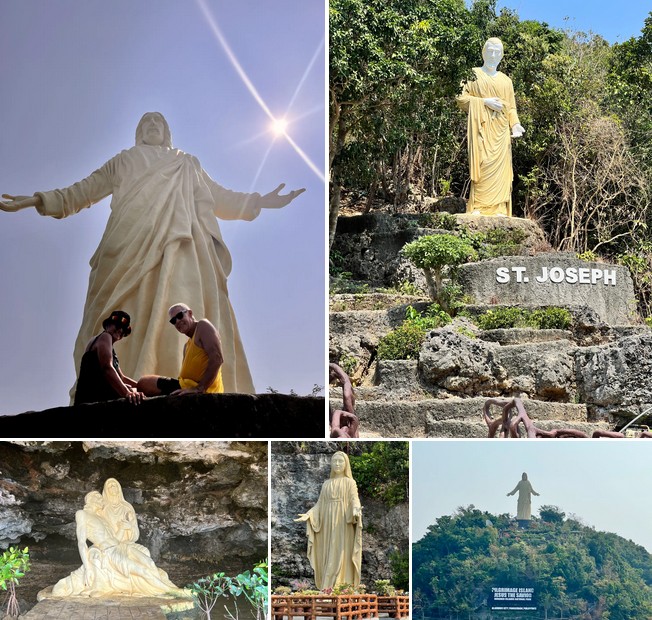
- Pilgrimage Island — home to the large Christ the Savior statue, reached by a long staircase.
- Pope Francis Statue — facing the sea with open arms.
- Marcos Island — more rugged, with a cliff opening into Imelda Cave.
- Imelda Cave — cool interior, bats clinging to the ceiling, and a deep‑water jump spot.
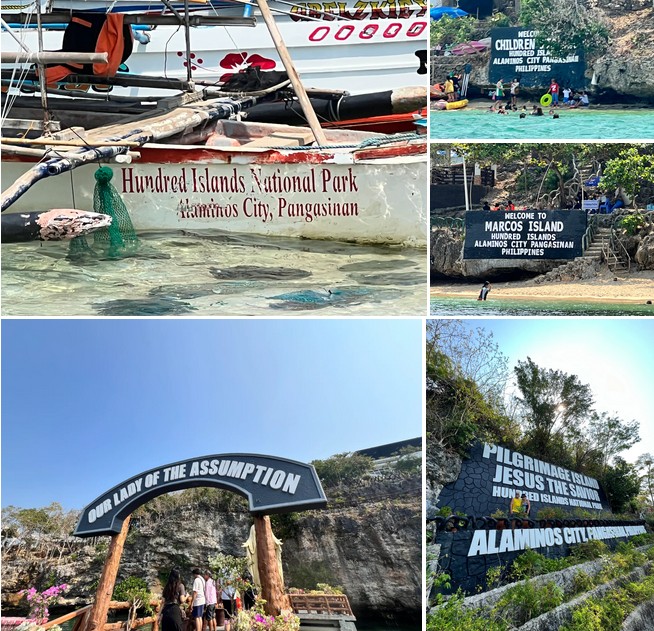
Marcos Island and Imelda Cave
Marcos Island is more rugged, with a cliff opening into Imelda Cave, where the air is cooler and bats cling to the ceiling in clusters. The water below is deep and clear — perfect for jumping.
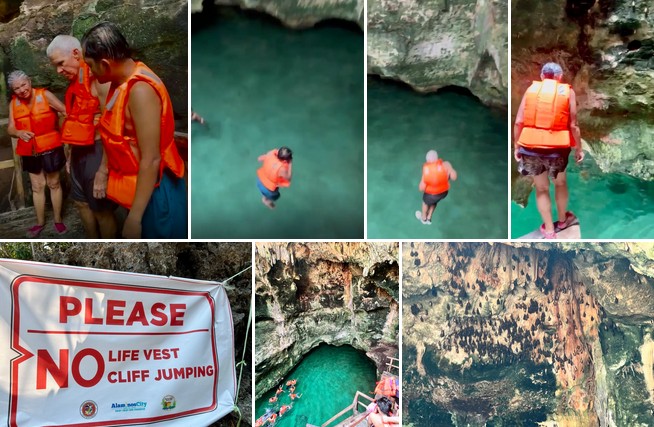
Ronell and Jay jumped into the deep water below — we have the photos to prove it, caught mid‑air at the exact moment they left the rock. As for whether I jumped… well, that remains a mystery. Some stories are better left for the reader to guess
Lunch on the Islands
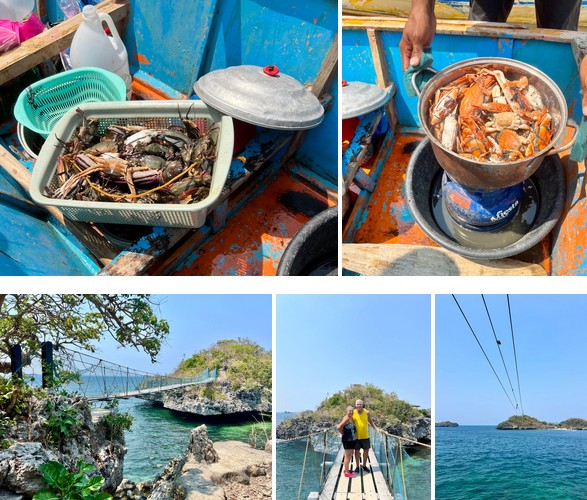
We brought a simple picnic, but Buddy spotted a fisherman selling fresh crabs from his small boat. He bought at least five kilos, and they were cooked for us right there. We sat together, eating with our hands, cracking shells, dipping the meat, and enjoying every bite. It was the kind of meal that belongs to the sea — simple, fresh, and perfect for the place.
🌿 A Simple Wish
As we moved from island to island, taking in the views and the water and the heat of the day, I found myself thinking of Rica. I wished she could have been here to see this part of the Philippines — the true seaside Philippines, the one shaped by nature, by salt water, by sunlight, and by the quiet beauty of the province.
One day, I hope she’ll stand on one of these islands and see it for herself.
 World Blog
Very nice reading on a lazy Memorial Day weekend.
I bet you were not one of the ones that jumped into that pool of water. Why am I surprised the Jay did? Meaning I would not have thought he would 😱.
Thanks for sharing the stories.
Joe