2024 May 18: Krakow

During our few days in Kraków, we saw the Cloth Hall and St. Mary’s Basilica, as well as ancient homes, castles, and churches including the Royal Castle and Cathedral on Wawel Hill. We strolled around the lovely Old Town, Rynek Glówny. We traveled to Nowa Huta, a whole city constructed during the communist era in Poland while our Local Specialist shared some incredible communist anecdotes with us.

We wandered down Szeroka Street in the historic Kazimierz neighborhood, which is home to synagogues, Helena Rubinstein’s birthplace, the Jewish Quarter, and the Ghetto. The streets of Kazimierz provided the setting for numerous scenes in the film “Schindler’s List.” Jay and I had the opportunity to visit Schindler’s Factory Museum one afternoon.
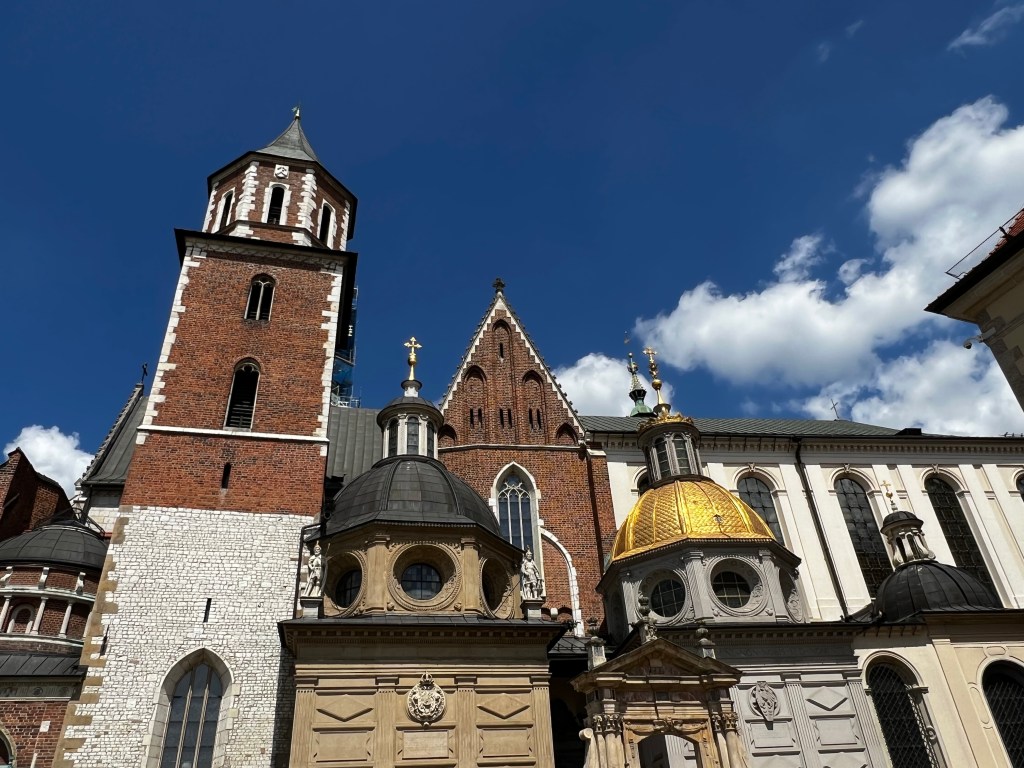
Pope John Paul II was particularly attached to Wawel Cathedral. The Bishop, and later Cardinal Wojtyła visited the cathedral an innumerable number of times. Four decisive moments in his life were connected with the Cathedral. Karol Wojtyła, then an ordinary priest, celebrated his first Holy Mass at the neo-Romanesque altar in St Leonard’s Crypt on the 2nd of November, 1946 . The Mass was for the intention of his deceased parents and brother. Wojtyła  was consecrated bishop on the 28th of September, 1958, St Wenceslaus Day, a patron of Wawel Cathedral,. He was installed here as archbishop on the 8th of March, 1964, and later as cardinal on the 9th of July, 1967.

Wieliczka Salt Mine

This is a must-see if you’re ever in Krakow. It’s unbelievable to think that regular salt miners created these beautiful sculptures. This place is an actual piece of art! We followed our local guide 135 m (440 ft) underground to marvel at the unique sculptures and the setting of this 800-year old salt mine

The Salt Mine reaches a depth of 1,073 ft, and extends via horizontal passages and chambers for over 178 miles. The rock salt is naturally of varying shades of grey, resembling unpolished granite rather than the white crystalline substance that might be expected.
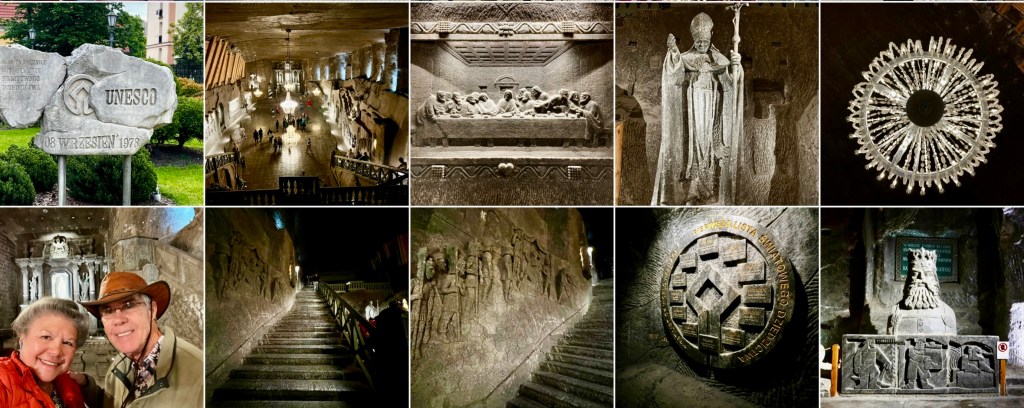
I know I have said this in all the previous posts, but, I REALLY wish we could have stayed longer!

2024 May 17: Off to the Tarta Mountains and Zakopane

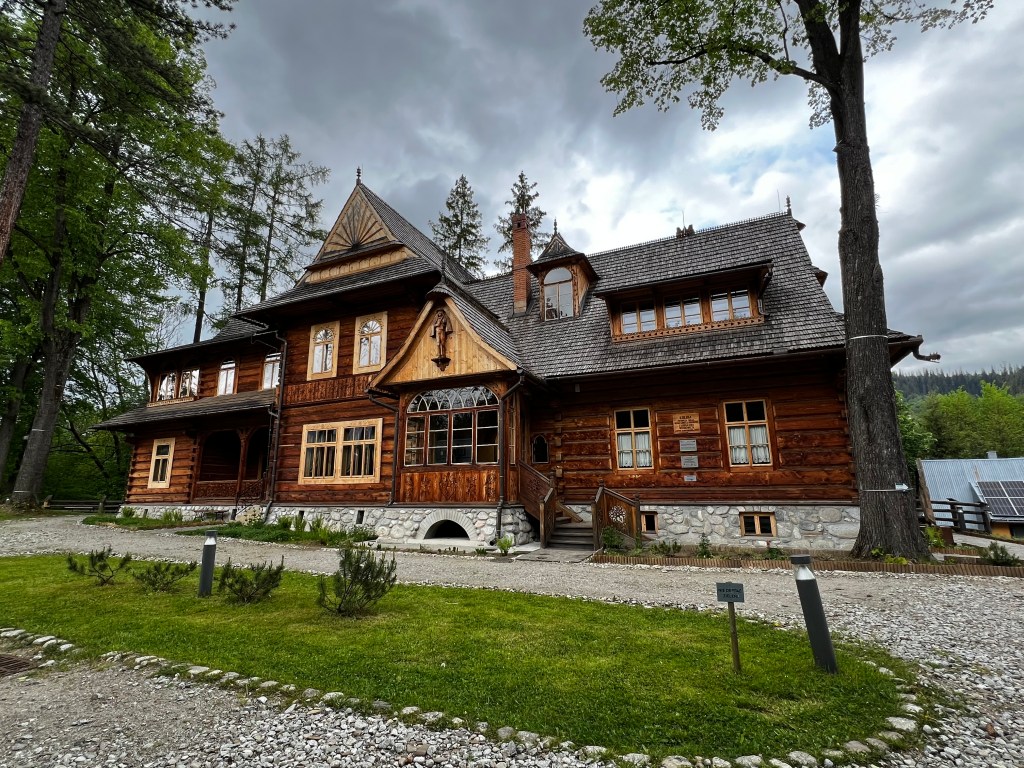
Zakopane is a resort town in southern Poland, at the base of the Tatras Mountains. It’s a popular departure point for winter sports and summertime mountain climbing and hiking. Kasprowy Wierch and Gubałówka, reachable by cable car and funicular, are nearby ski destinations offering sweeping mountain views.

The town is also known for its turn-of-the-20th-century wooden chalets, symbols of Zakopane-style architecture. 

The oldest part of the complex, the chapel of the Immaculate Heart of Virgin Mary, was built in 1951, with the statue of Our Lady of Fatima located inside. It was given to cardinal Stefan Wyszynski by the bishop of Fatima and placed in the chapel in 1961. On 15th of October 1961, Karol Wojtyla, later Pope John Paul II and bishop of Krakow at that time, consecrated the chapel and the statue.The church you see today was was created in gratitude for saving Karol Wojtyla’s life in the unsuccessful assassination attempt on 13th of May 1981. It was consecrated by Pope John Paul II in June 1997 during his sixth pilgrimage to Poland.

This was another stop that I just wished we had more time to explore!

2024 May 15 – 16: Journey to Toruń and Wroclaw

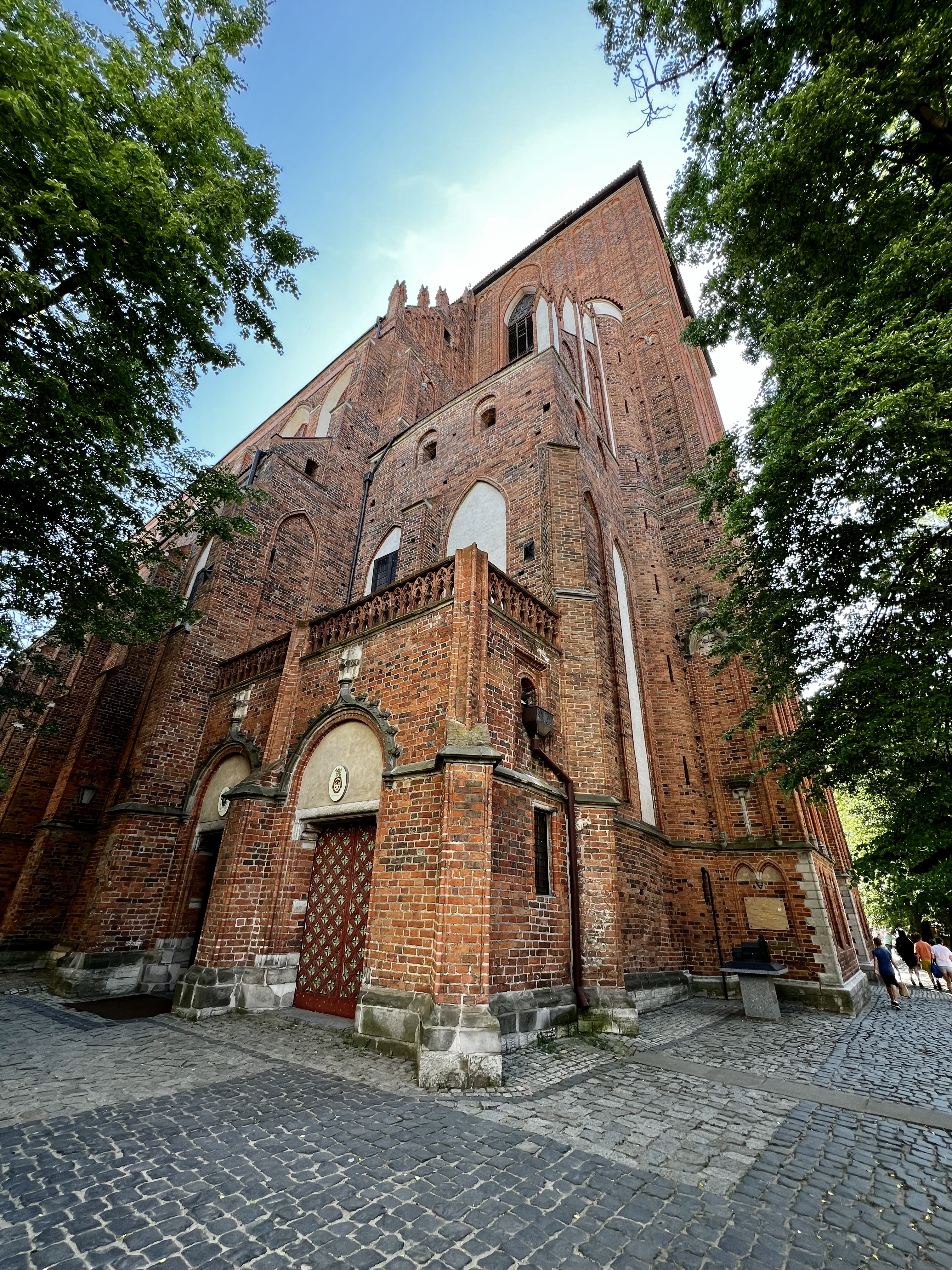
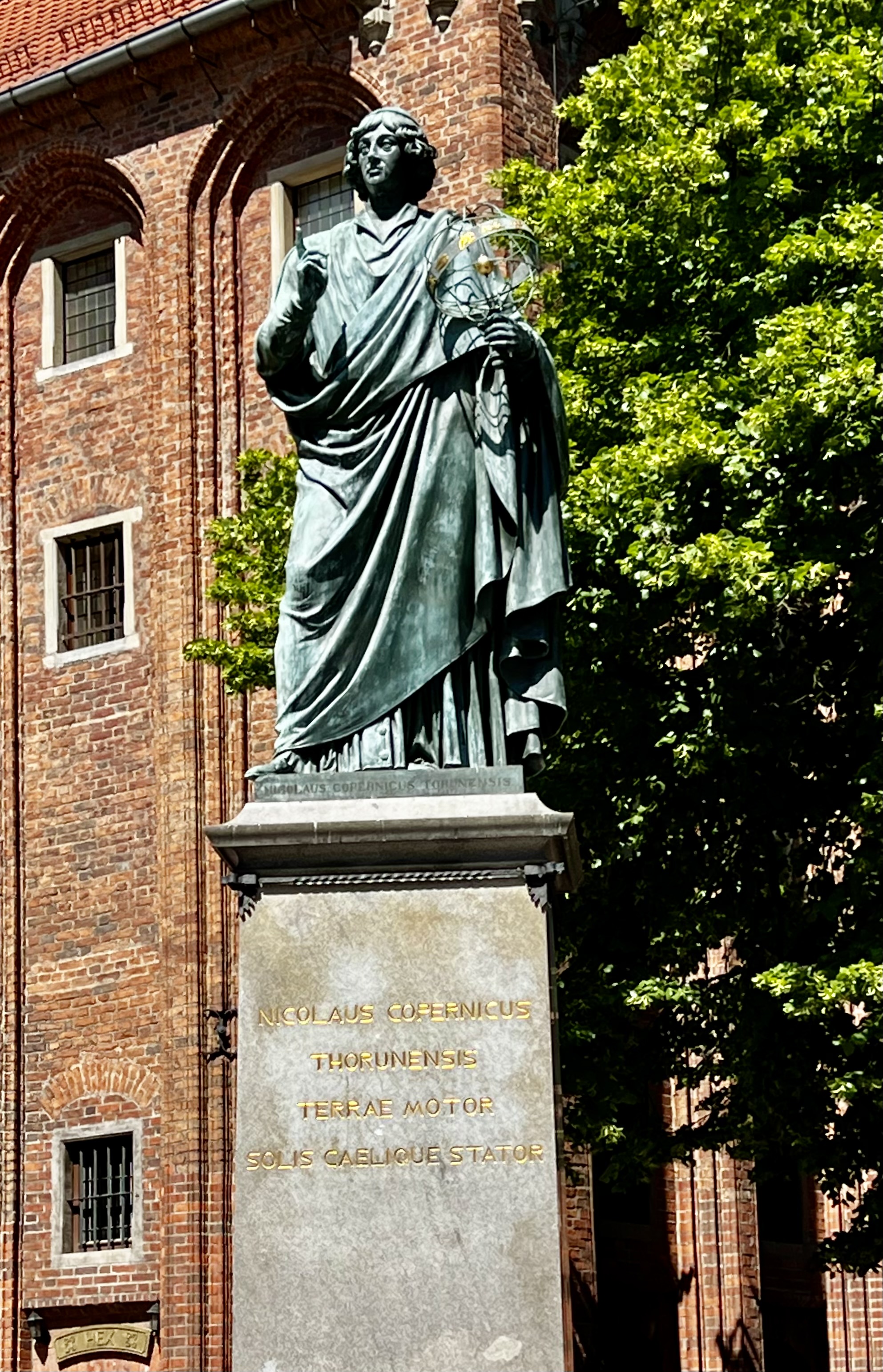
Established by the Teutonic Knights in 1233, Toruń was tremendously lucky to escape damage during World War II and is therefore extremely well-preserved. As one of Poland’s oldest cities, it lets visitors really imagine the pace of mediaeval life while strolling among moody Gothic churches and picturesque burgher houses on cobblestone streets.

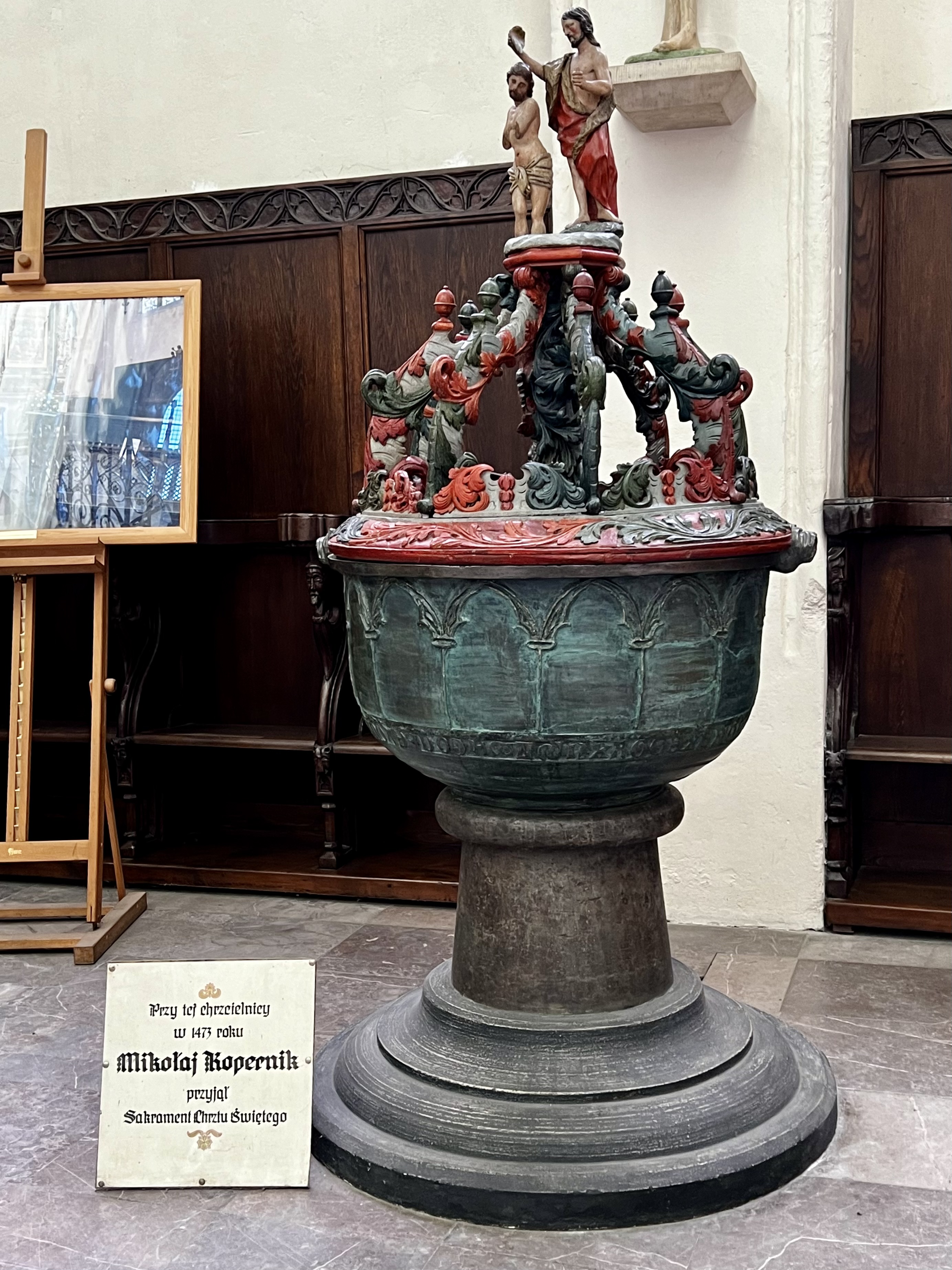
The church and Baptismal font in which Nicolas Copernicus was baptized in 1473 can be seen in a side chapel inside the Cathedral of St. John the Baptist and St. John the Evangelist in, Toruń, Poland.

The Leaning Tower of Toruń, while not quite Pisa, this 15-metre tower was built at the turn of the 14th century in order to defend the town, but leaned soon after due to the instability of the ground. The tower stopped performing its defensive function in the 18th century and in fact now houses an atmospheric pub where you can try one of the local brews.

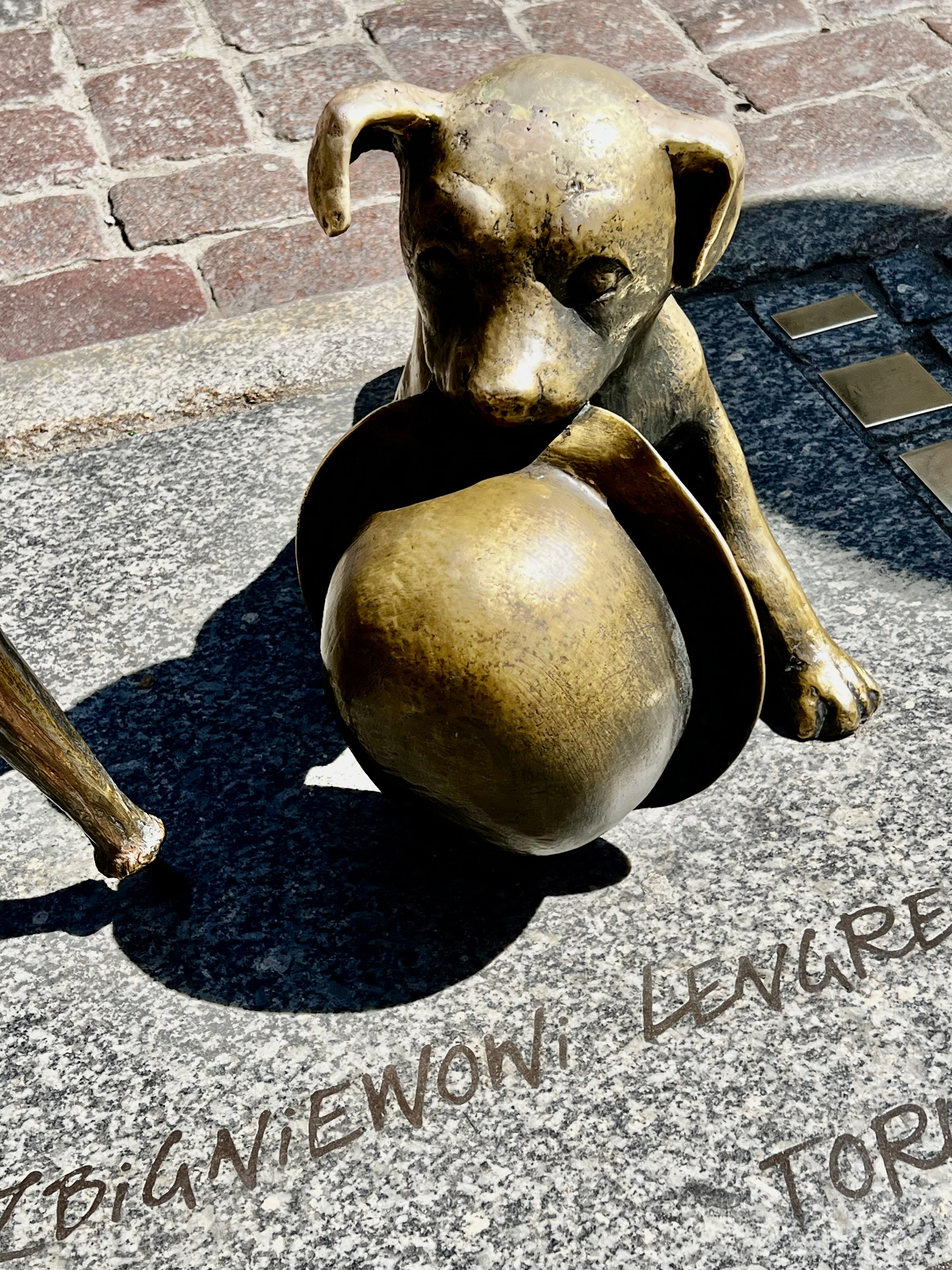
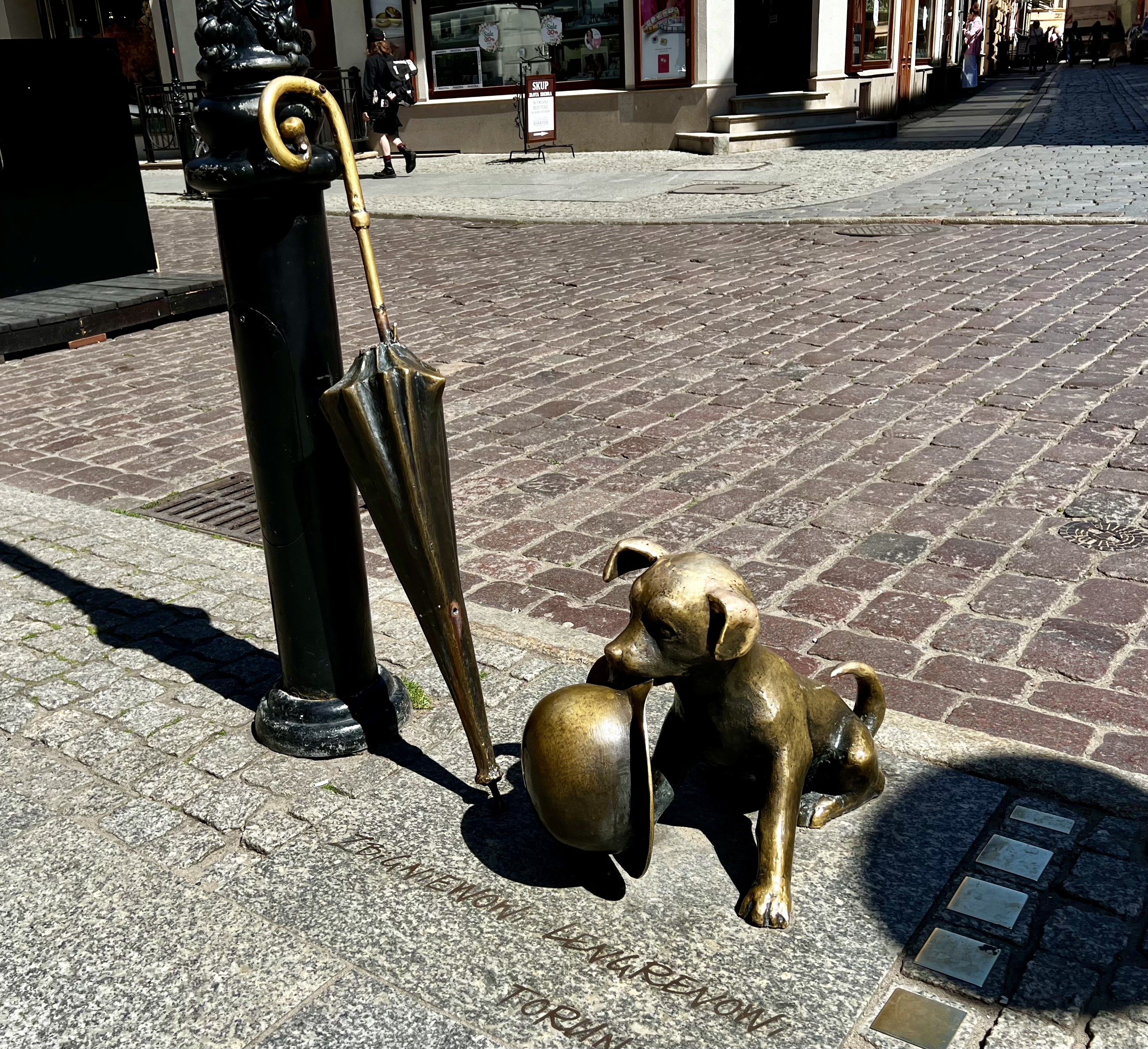
Filuś is a small, cast-in bronze small mutt, sitting in the north-east corner of the Old Town Square. It is waiting there for his master, it is holding a bowler hat in its mouth and watching the umbrella which is leaning against the lantern. It is not difficult to notice that the friendly dog is a companion of the famous professor Filutek, the character of the funny drawing stories. They were published during the gloomy days of Polish People’s Republic in the popular Cracow cultural weekly magazine ‘Przekrój’ which has been published continuously since 1948.

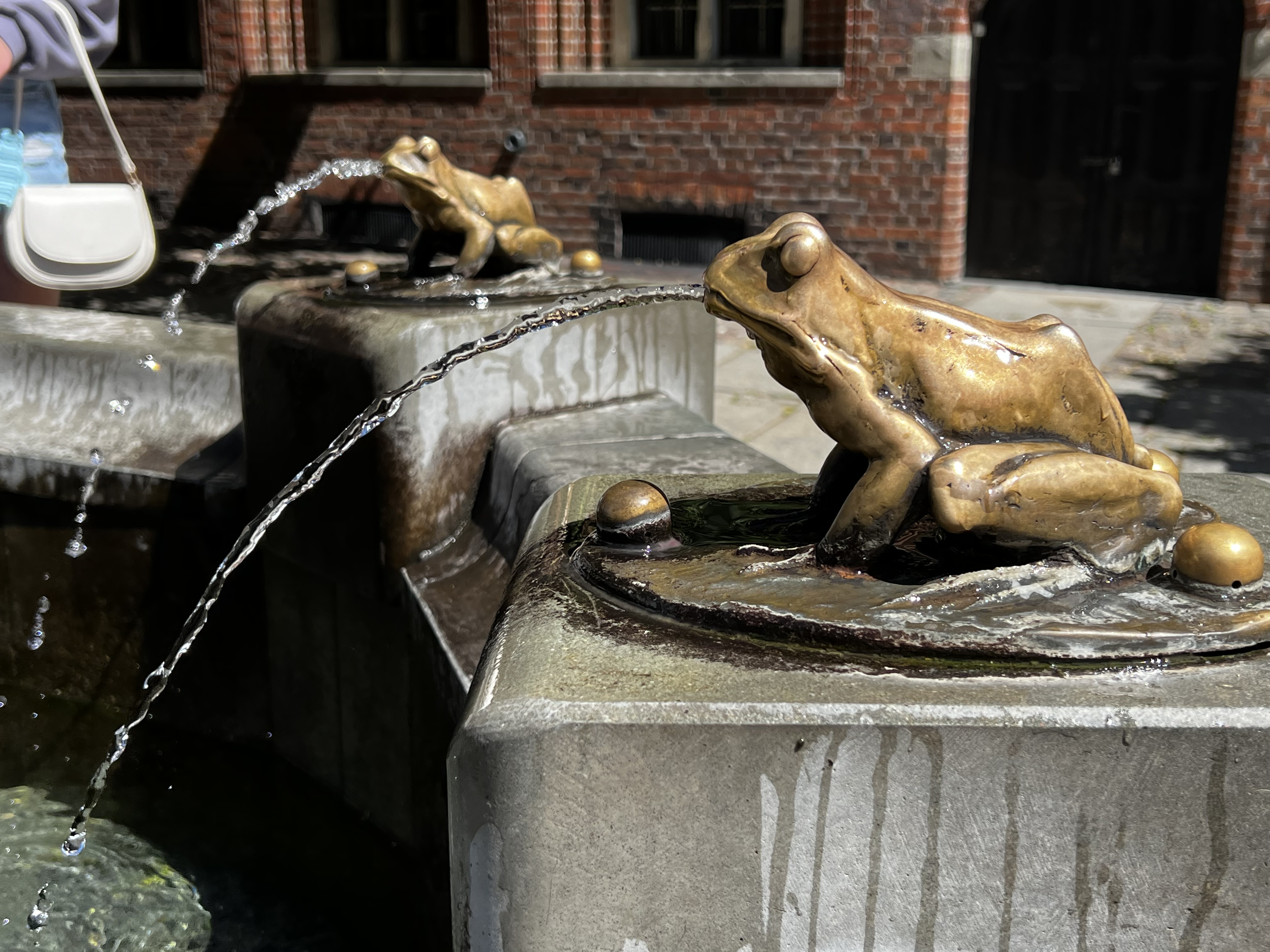
Toruń’s famous frog fountain and adjacent statue of the raftsman commemorate the local legend of a travelling witch, who was expelled from the city, and got her vengeance by cursing Toruń with a plague of frogs. Today, the piegons enjoy the cool water from the fountain!

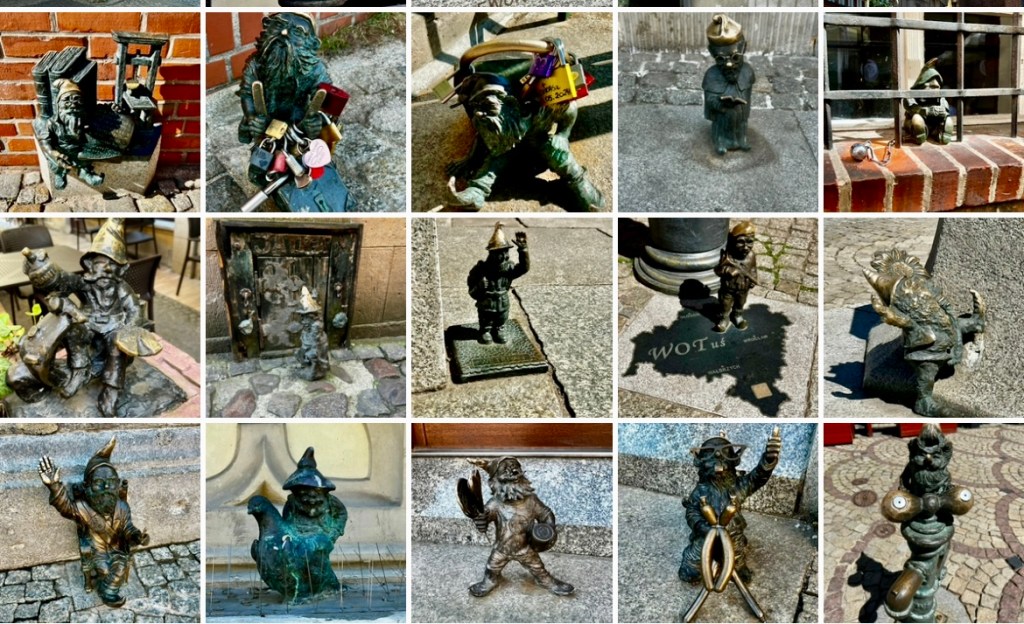
Wroclaw In Search of Gnomes

If you are ever in Wroclaw,  add an extra day to your trip to go in search of the gnomes. I will definitely stay longer in Toruń and Wroclaw next time.

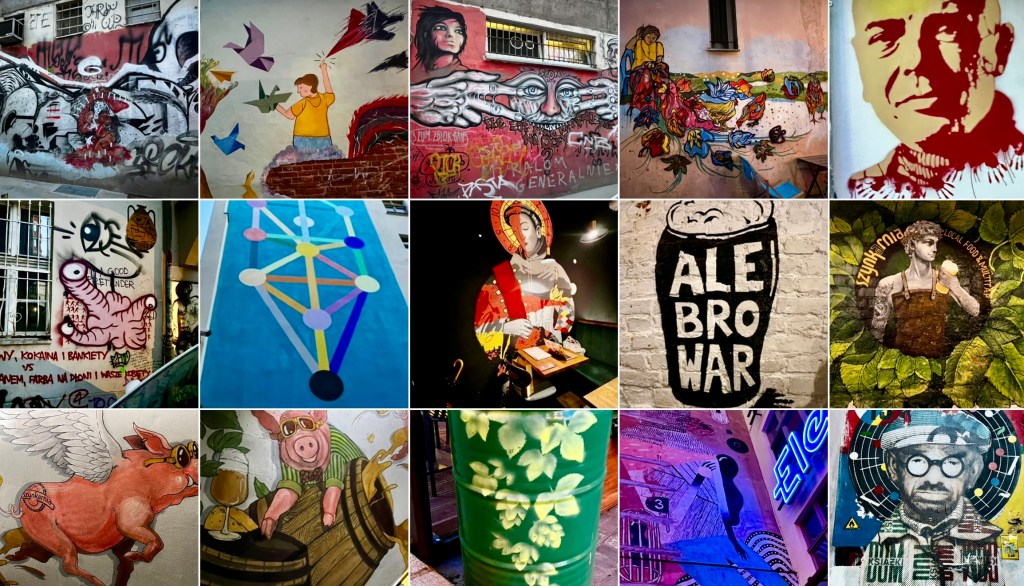
And of course Street Art

2024 May 13 – 14: Gdańsk, So Much To Do, So Little Time

Gdańsk (Danzig in German) is a port city on the Baltic coast of Poland. At the center of its Main Town, reconstructed after WWII, are the colorful facades of Long Market, now home to shops and restaurants. Nearby is Neptune Fountain, a 17th-century symbol of the city topped by a bronze statue of the sea god. Gdańsk is also a center for the world’s amber trade; boutiques throughout the city sell the ossified resin.

Daniel Gabriel Fahrenheit was born in Gdańsk. Fahrenheit invented thermometers accurate and consistent enough to allow the comparison of temperature measurements between different observers using different instruments.Fahrenheit is also credited with inventing mercury-in-glass thermometers. I’m sure I’m not the only one who remembers those things!

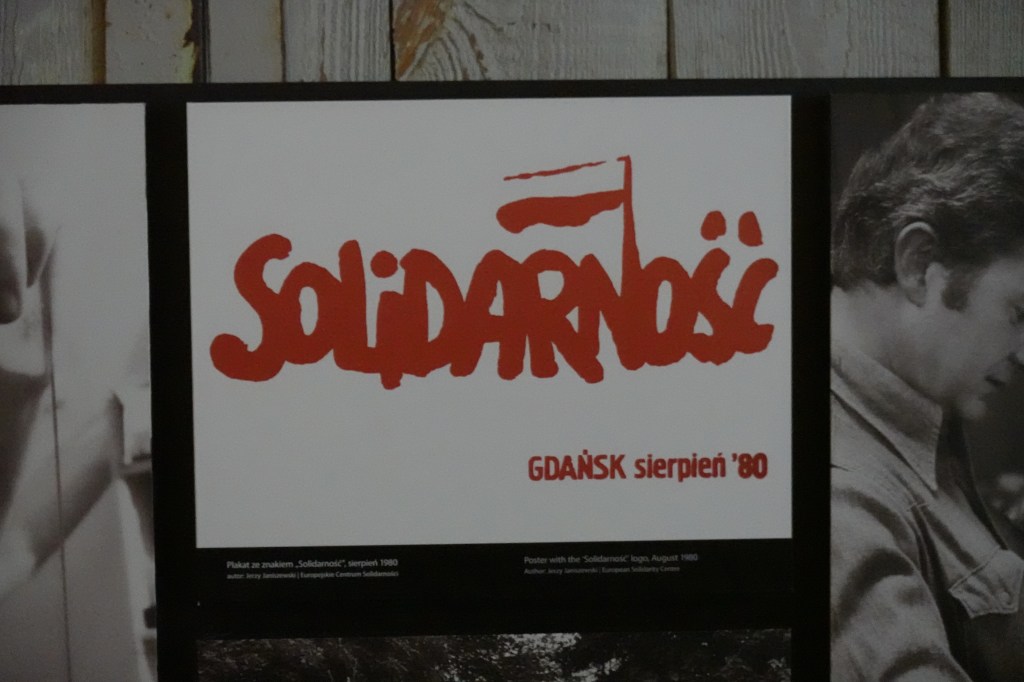
The European Solidarity Center is a museum and library devoted to the history of Solidarity, the Polish trade union and civil resistance movement, and other opposition movements of Communist Eastern Europe. It opened on 31 August 2014.

The Castle of the Teutonic Order in Malbork, commonly known as Malbork Castle, is a 13th-century castle complex located in the town of Malbork. It is the largest castle in the world measured by land area and a UNESCO World Heritage Site. It was originally constructed by the Teutonic Order, a German Catholic religious order of crusaders  in the form of an Ordensburg fortress and named Marienburg in honor of Mary, the mother of Jesus.

Kwaśne Jabłko (Sour Apple)

We enjoyed a delicious Be My Guest lunch at a farm called  Kwaśne Jabłko (Sour Apple), an organic farm and lodge tucked away from roads, in the Pasłęka River Valley. I always look forward to the Be My Guest stop and  I must say that this will be on my top 10 favorites.  

I wish we could stay here longer.

2024 May 11 -12: Meeting Everyone and Warsaw

We met our fellow travelers for our tour around Poland this evening. This is the first time I’ll ever be on a coach with 51 total passengers; actually, I never knew the coach had that many seats. I just hope none of us are assigned to sit in the baggage compartment!

After our introduction, we took a ride around town and enjoyed a nice welcome meal at a local Polish restaurant that I thought was never going to stop serving food.

One of the many dishes we tasted was something called Smalec, a dish made of rendered pork fat (lard), bacon, onion, and spices. Apples are used in many recipes as well and though I don’t like cooked apples, the crust on the dessert was perfect with the ice cream!

May 12: Mother’s Day’s in Warsaw

Rather than a particular Sunday, Polish Mother’s Day (Dzień Matki) is always celebrated on May 26th, no matter what day of the week. First celebrated in Krakow in the early 1900s; it is not a public holiday and was said to grow in popularity after the Second World War.

Our first morning out was a tour around the city center with a local specialist who gave us deeper insight on how the city was rebuilt after the Second World War.

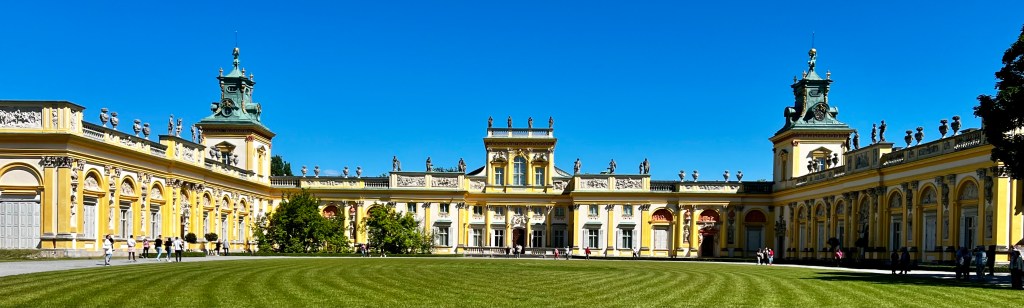
We also visited Wilanow Palace which was built in the late 17th century as a summer home for King Jan Sobieski III. The treasures inside the palace form part of the museum. which is considered to be one of the oldest in the country and the repository of the country’s royal and artistic heritage.

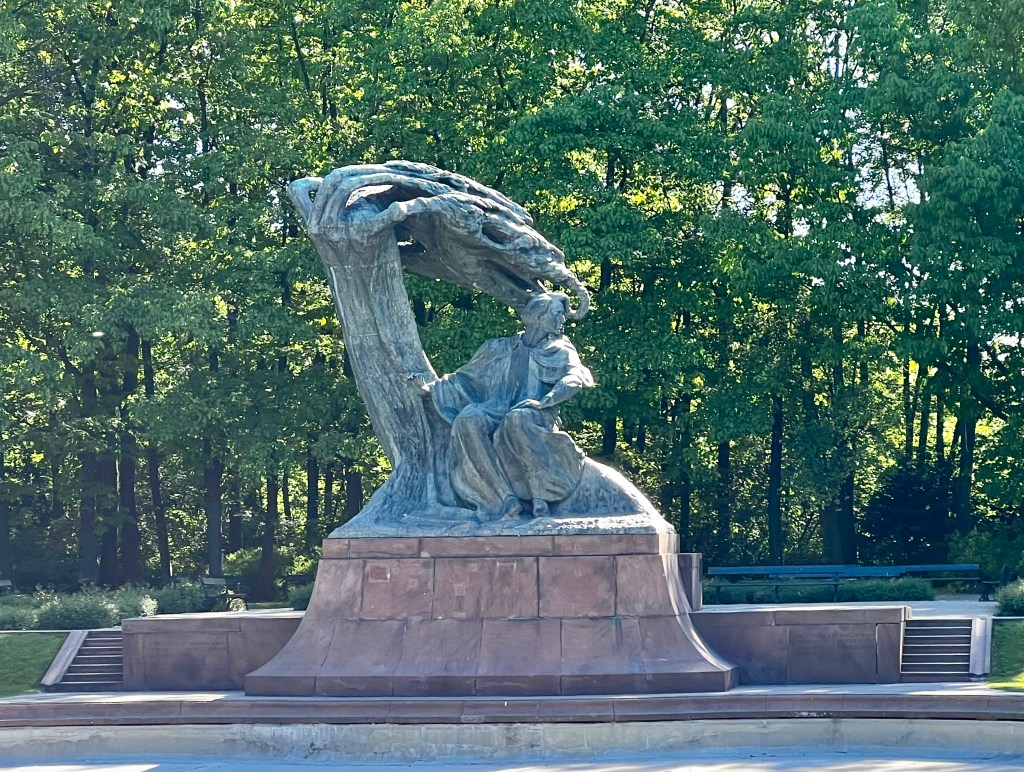
Łazienki Królewskie is a favorite place for walks and an oasis of green in the center of Warsaw where one can rest watching nature and take a break from the hustle and bustle of the city. This park-and-palace complex was a summer residence of King Stanisław August and nowadays performs a variety of functions: it’s a museum, a place of cultural, scientific and entertainment events and, due to the summer concerts that take place at the foot of the world’s most famous monument of Fryderyk Chopin, also an important place for music lovers.

We decided to skip a repeat visit to the Vodka Museum and instead get ready for our early departure to Gdańsk in the morning.

2024 May 6 – 10: Warsaw, Poland

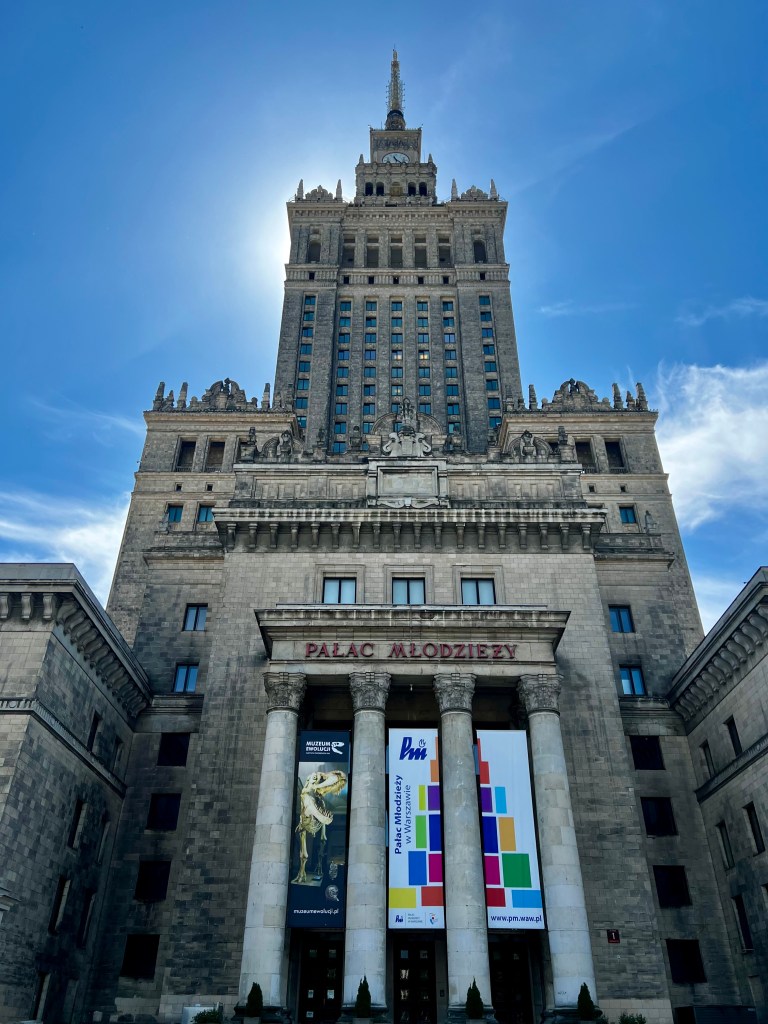
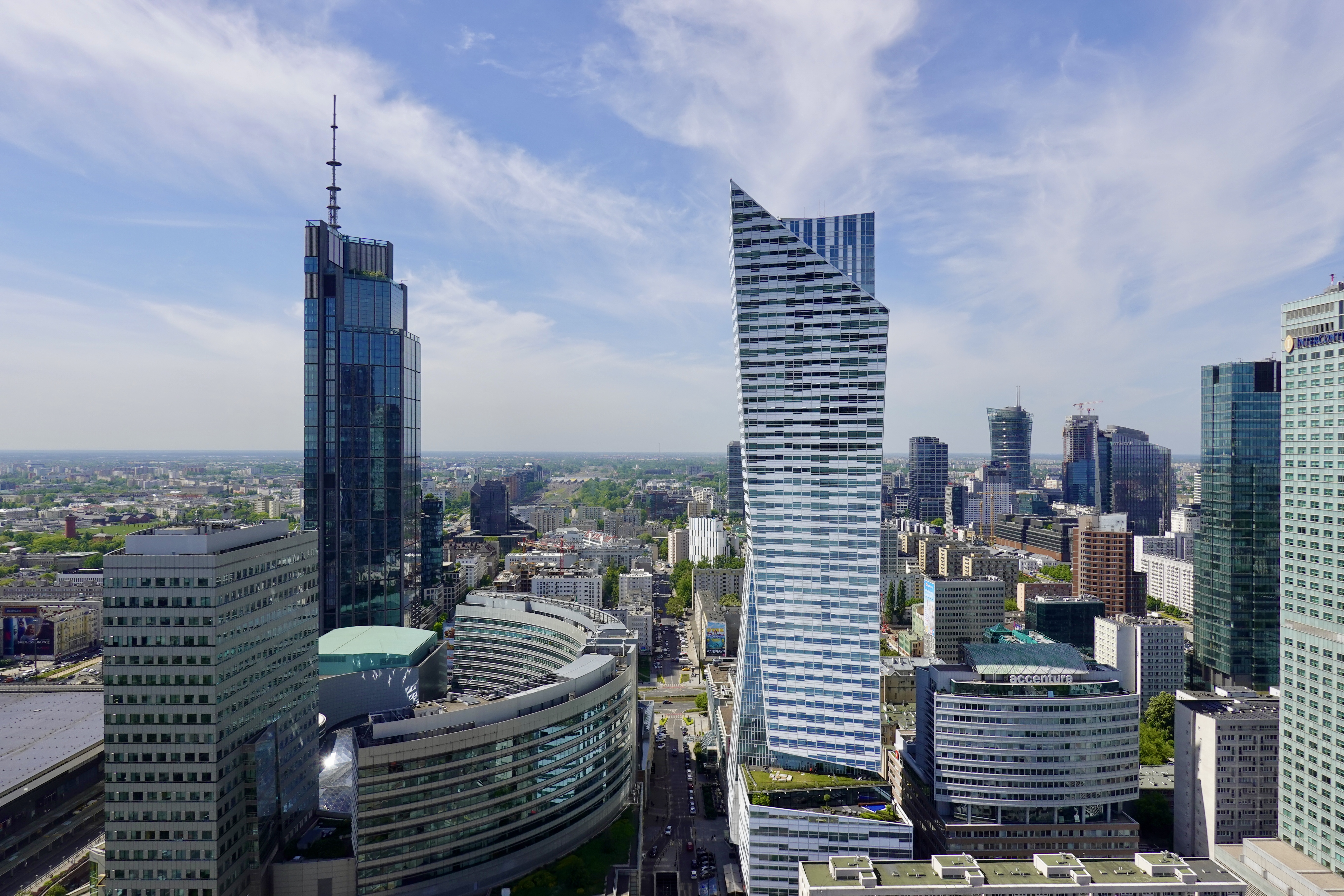
Our quick and easy flight from Milan to Warsaw went well. It was obvious that we were in for a wonderful stay as we drove to our hotel, which is conveniently situated in the heart of Warsaw’s busy city center. Warsaw’s City Center is known locally as ‘Śródmieście,’ which is a catch-all term for the downtown area. Definitions vary, but generally, you know when you’re in it – wide streets, huge monumental buildings and skyscrapers, construction sites, billboards, busy crosswalks and little to stand in the way of progress. It’s the modern, fast-paced, forward-looking part of the city radiating out from the  Palace of Culture & Science, and it’s here that you will find the majority of the city’s hotels and restaurants along with government buildings and places of commerce – the heart of the contemporary capital. 


The Royal Castle in Warsaw. The castle is a symbol of Polish statehood and history. Its origins date back almost seven centuries and the design of its present structure has evolved in stages since the fourteenth century. The actual structure is a mid-20th-century reconstruction of the original castle, which was mostly demolished by German occupiers during World War II.

The Palace of Culture & Science. An agreement on the construction of the building was signed between the governments of the Polish People’s Republic and the Soviet Union on 5 April 1952. The tower was an imposed and unwanted “gift” to the people of Poland. It was erected with great propagandist fanfare and named after Joseph Stalin upon its completion in 1955.

Stalin’s ‘gift’ to Warsaw has always been controversial – housing was desperately needed when it was built and 100 of the city’s few serviceable buildings were demolished to make way for it. All the same, the Palace of Culture and Science has remained a massive landmark on Warsaw’s skyline, even as other skyscrapers have grown up around it. The 30th floor offered views of the entire city in all directions.

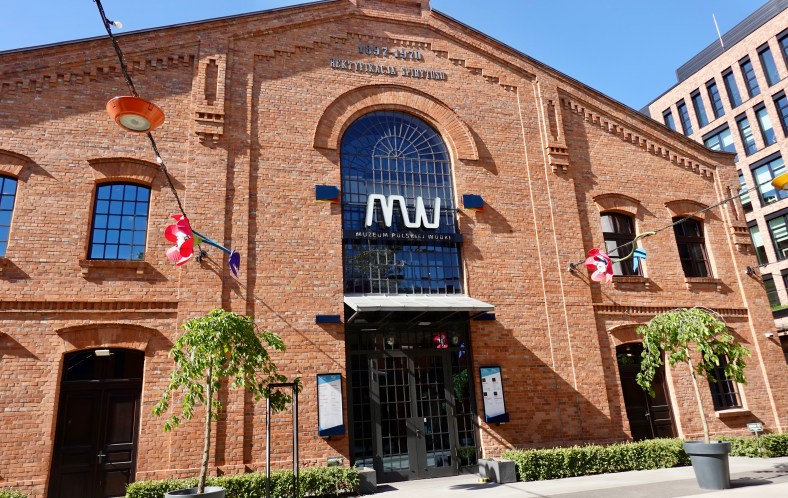
The Warsaw Rising Museum was opened on the 60th anniversary of the outbreak of fighting in Warsaw. The Museum is a tribute of Warsaw’s residents who fought and died for independent Poland and its free capital. The museum was exquisitely created. Very touching and it made me wonder about our world today.

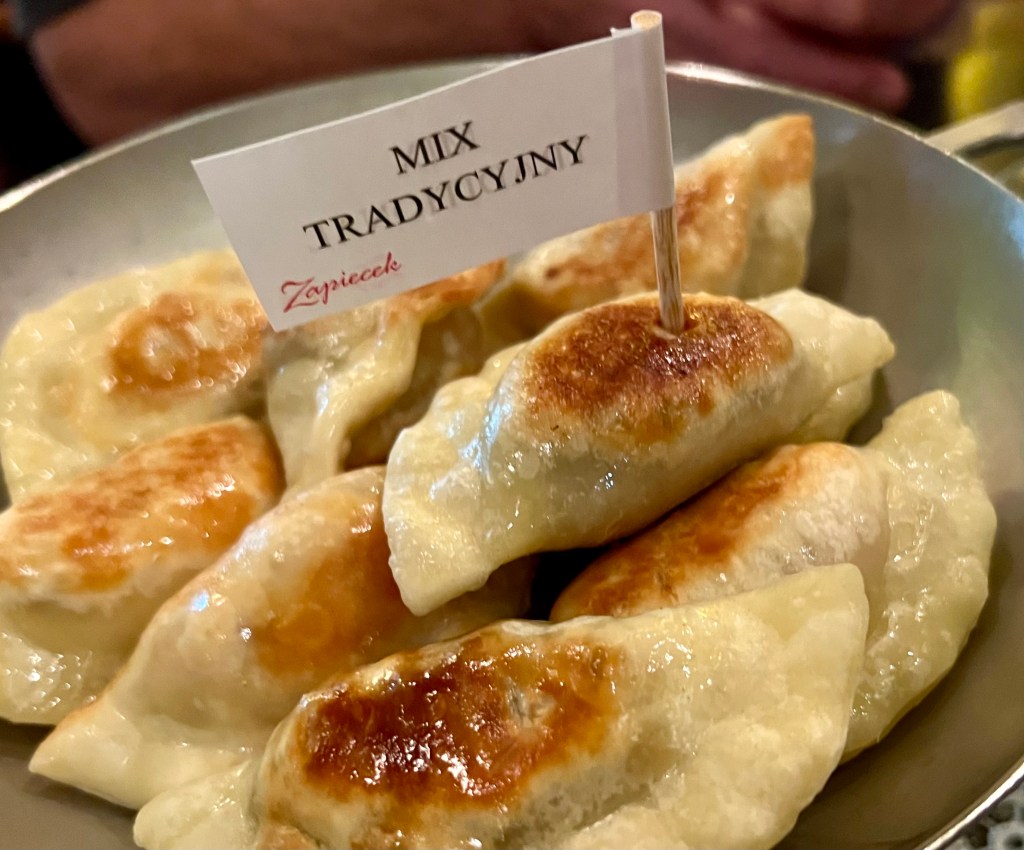
We could not decide so we went with the mixed plate.

We received a seal of approval from our friend Alex!

“The pierogi look excellent! Good choice! “

The Holy Cross Church interns Chopin’s heart in a crypt. His heart was preserved in a jar and taken back to Warsaw. Repatriating bodies was difficult at the time, so returning a body part to someone’s place of birth was not unusual.

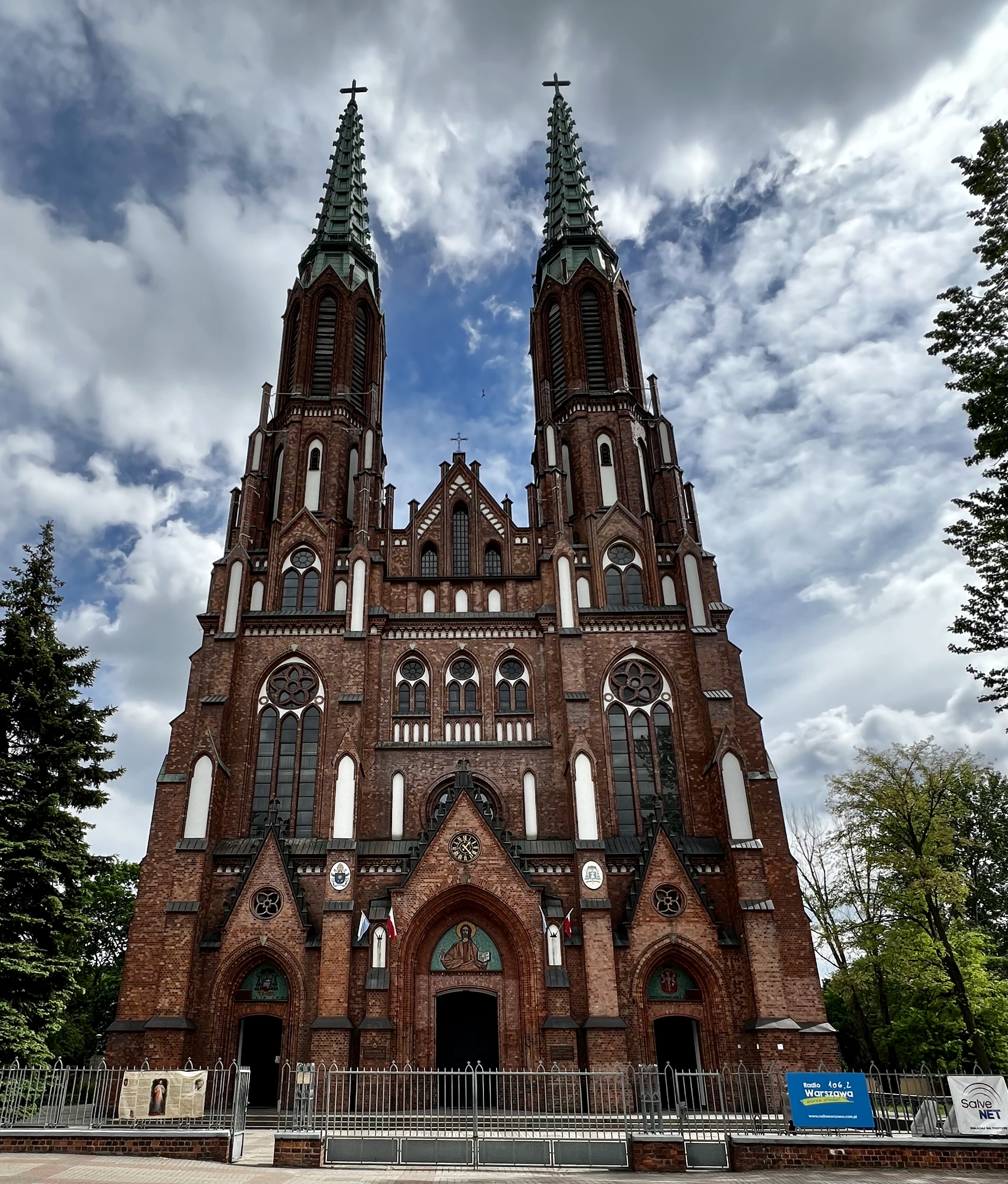
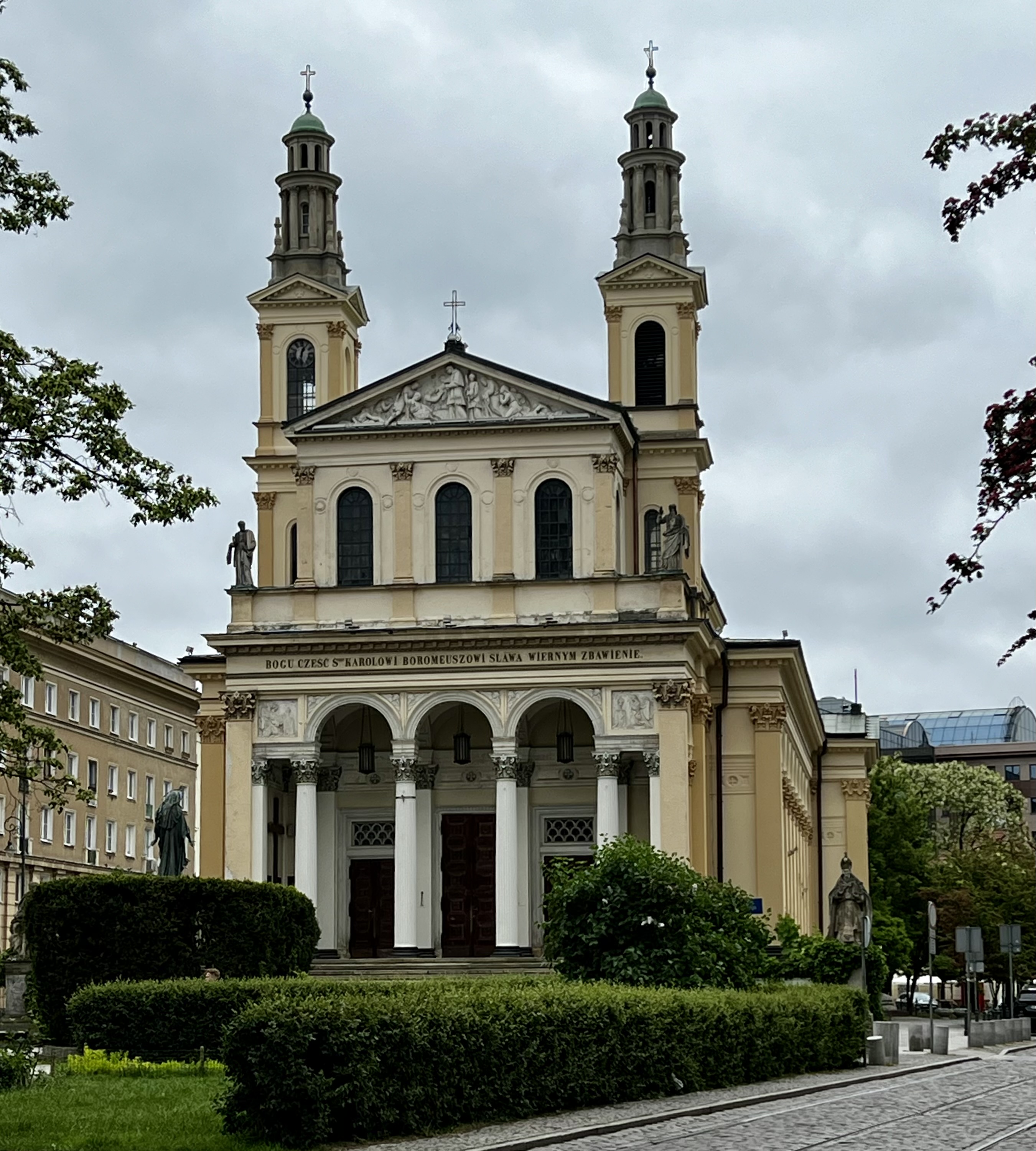
And yes, ABC (Another Bloody Church), many more churches and they were all beautiful inside.


We took the Tram twice to the Praga District. I was telling our tour director all the places we’ve seen when we saw him this morning, and he asked, “You went by yourselves? Naturally, I said “yes,” to which he replied, “You are brave.” 

I’ll have to figure out why we shouldn’t have gone on our own!

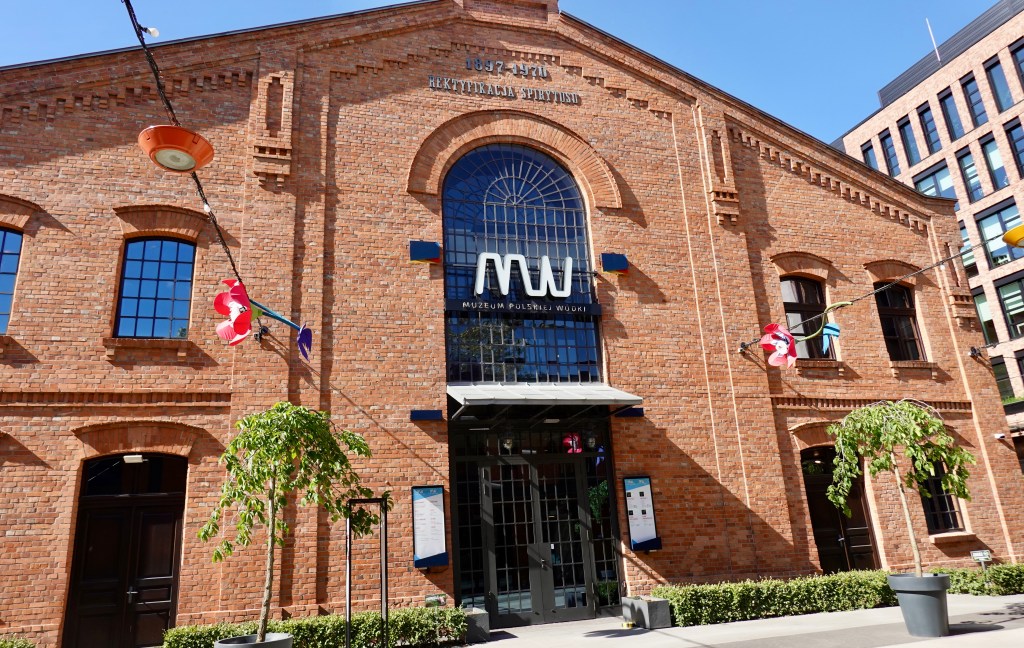
Museum of Polish Vodka is not only a national heritage, but it is also an essential attribute of ‘Polishness’ recognized all across the world. It is also a crucial element of Polish culture, which has been served on Polish tables during celebrations for centuries. The goal of the Polish Vodka Museum was to create a space where vodka’s unique history could be displayed.

We enjoyed an evening listening to a concert at the Fryderyk Concert Hall

Laundry Day

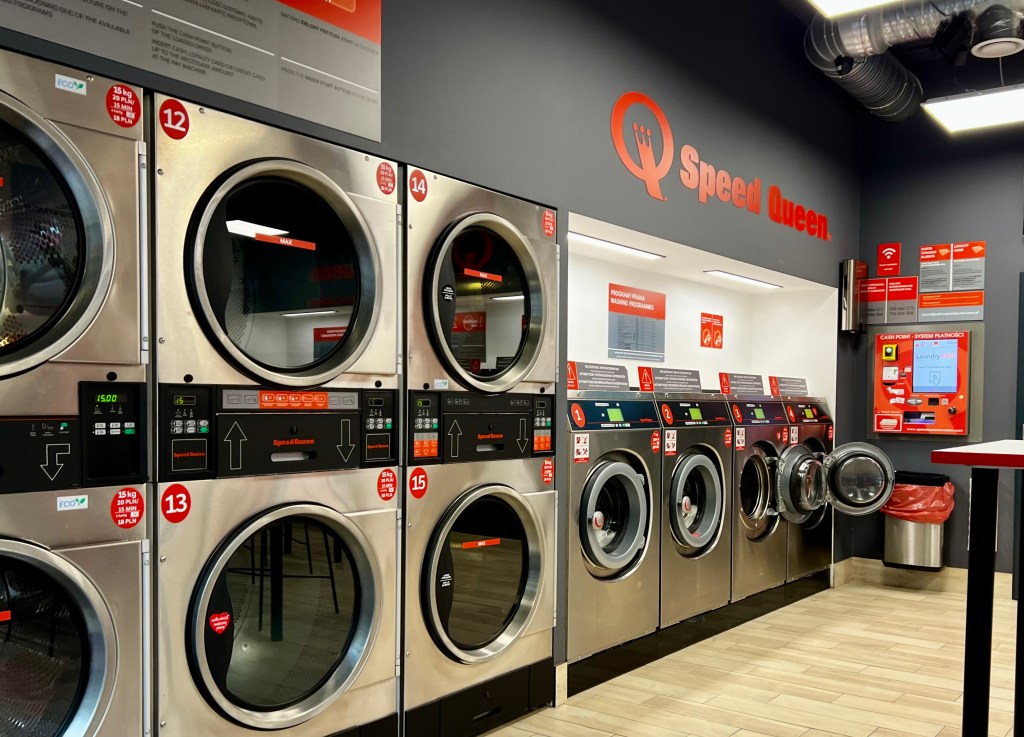
We’ve never encountered a laundromat this convenient in all of Europe. Fortunately for us, the directions are also in English, and it’s just around the corner from the hotel. We’re all set for our official Trafalgar tour, which begins Saturday afternoon This is our final laundry before we go home!

Location: Downtown Warsaw, from Castle Square to the Polish Parliament building (Wiejska 6, 00-481 Warsaw).

Event: The Embassy has learned that a demonstration organized by PiS and Solidarity Trade Union is scheduled to take place Friday, May 10, 2024, starting at 12:00 p.m. and is projected to last until 10:00 p.m. 

Participants will gather at Castle Square and march towards the Polish Parliament building.

Due to the potential size of the crowds, estimated to rise potentially to 200,000 participants, U.S. citizens are advised that serious traffic congestion may occur.  Public transportation may be crowded as well. 

Location: Downtown Warsaw, from Castle Square to the U.S. Embassy (Aleje Ujazdowskie 29/31)

Event: The Embassy has been informed by Polish police of a march in Warsaw organized in support of Palestinians.  The march is scheduled to take place Sunday, May 12, 2024, starting at 1:00 p.m. and concluding at approximately 4:00 p.m.

Participants will gather at Castle Square (plac Zamkowy), with the march ending at the U.S Embassy.

Police expect the demonstration to be peaceful, although the possibility for demonstrations to escalate always exists.  In the event of an emergency, call 1-1-2 for Polish Emergency Services.

We’ve had an exciting and enlightening experience seeing Warsaw on our own the past 5 days. I will include more sites in the “official” photo book once I get it together!

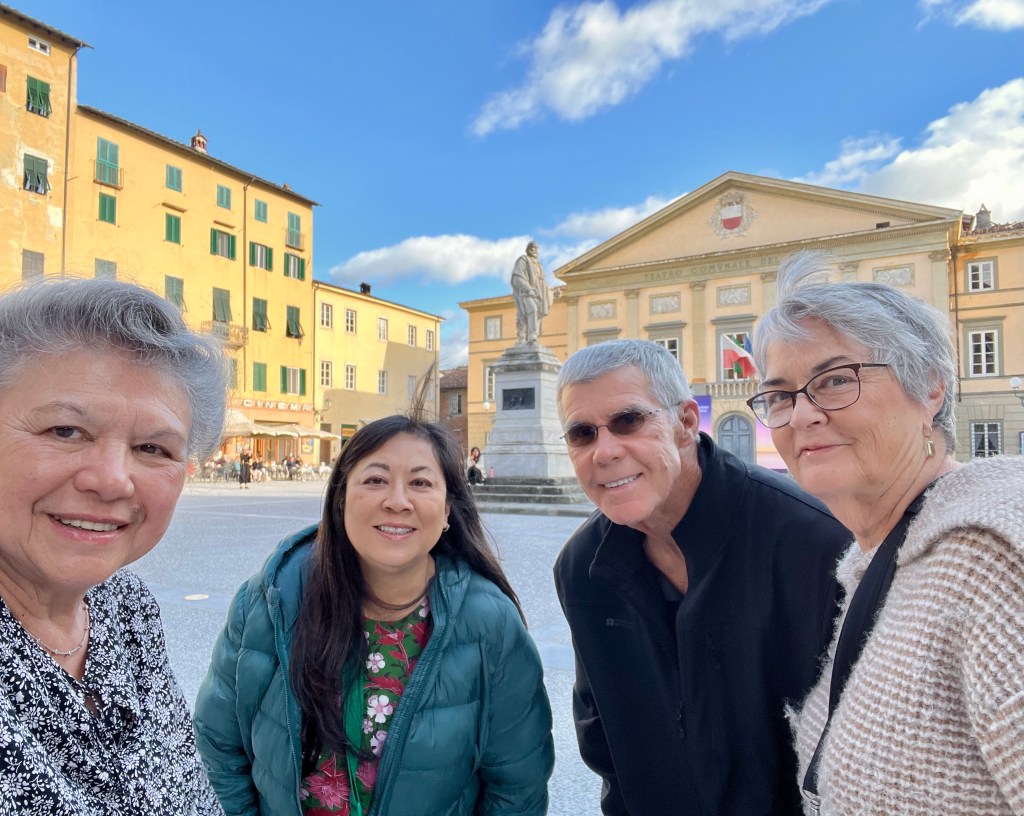
2024 May 2-4: Lucca, Italy

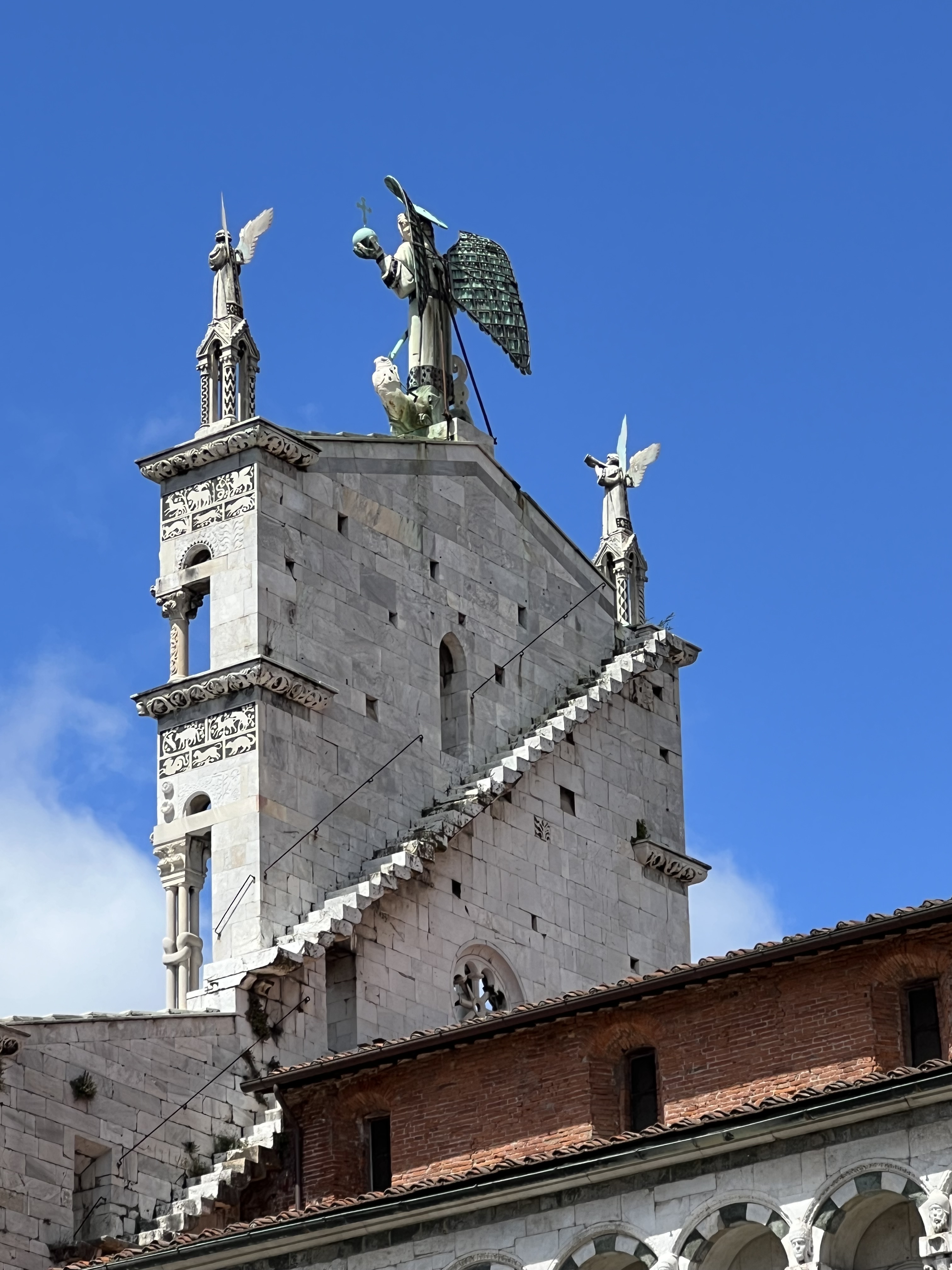
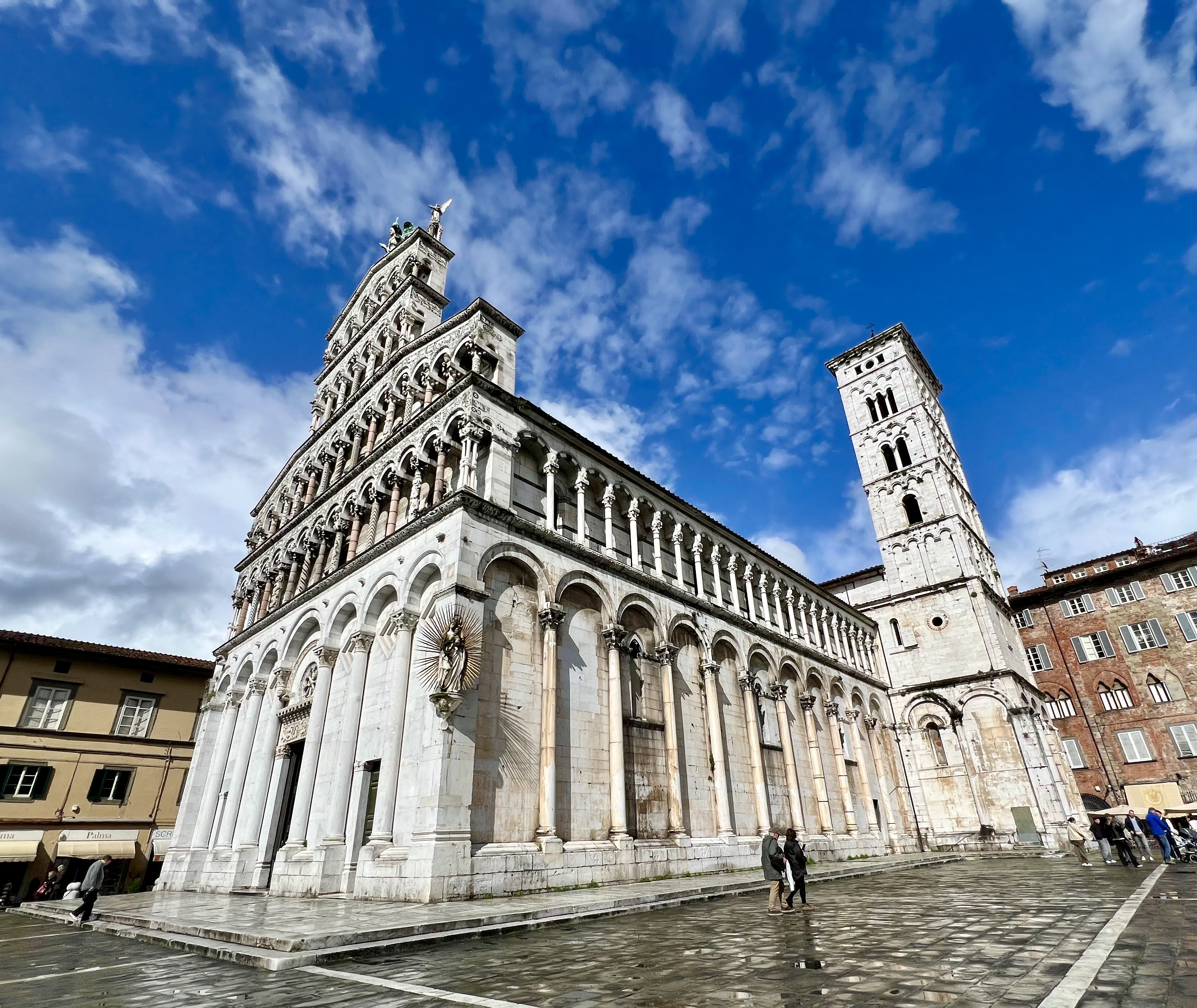
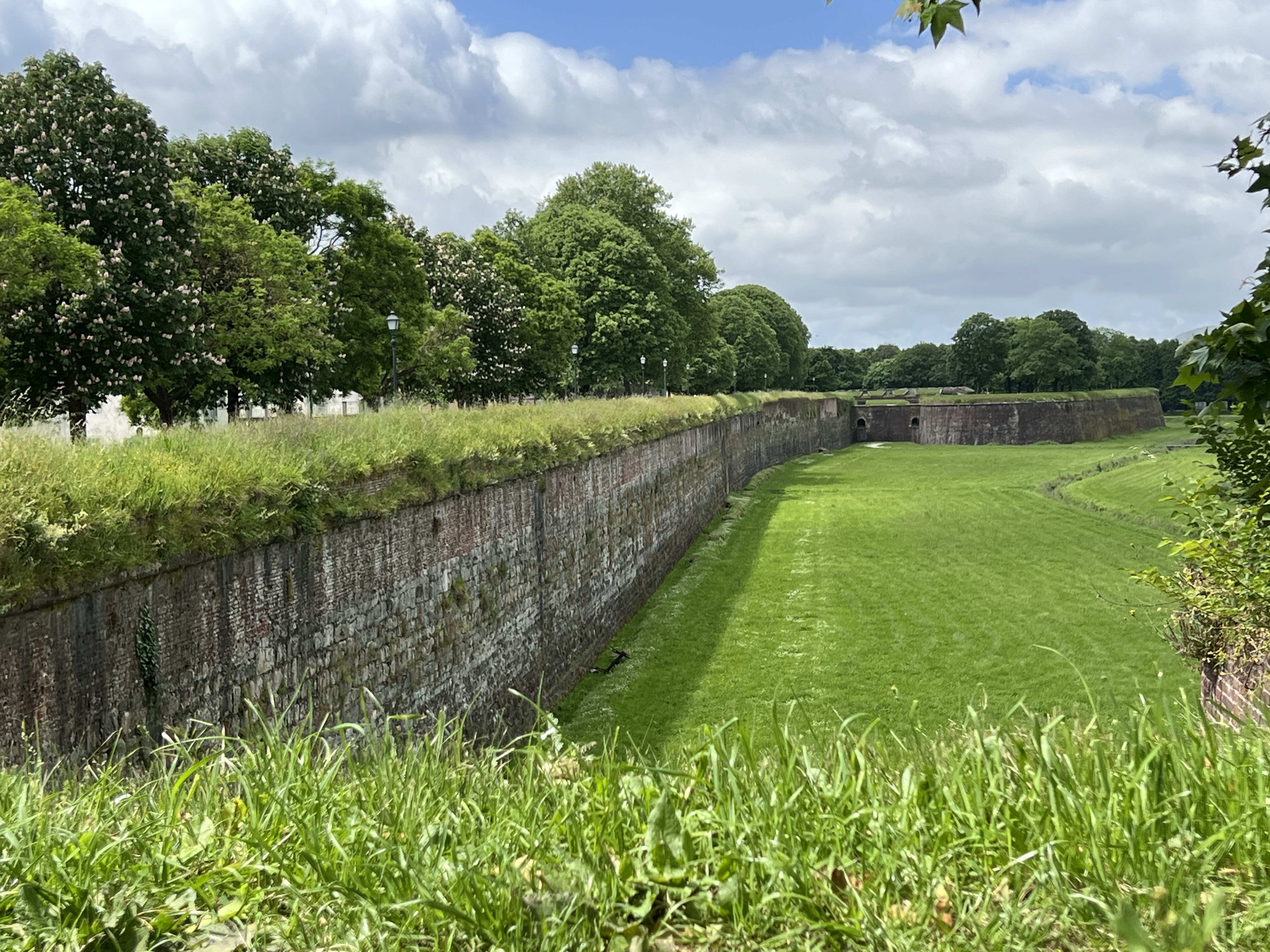
Among  the many treasures of Tuscany lies Lucca, a fairytale-like city with towering Renaissance walls in the shadows of the Apuan Alps and the Pisan Mountain Range. Lucca was everything I heard it was and expected it to be. During the Middle Ages, this beautiful medieval town became a prominent center for silk manufacturing, and by the 15th century, it had become the largest producer of silk textiles in Europe.

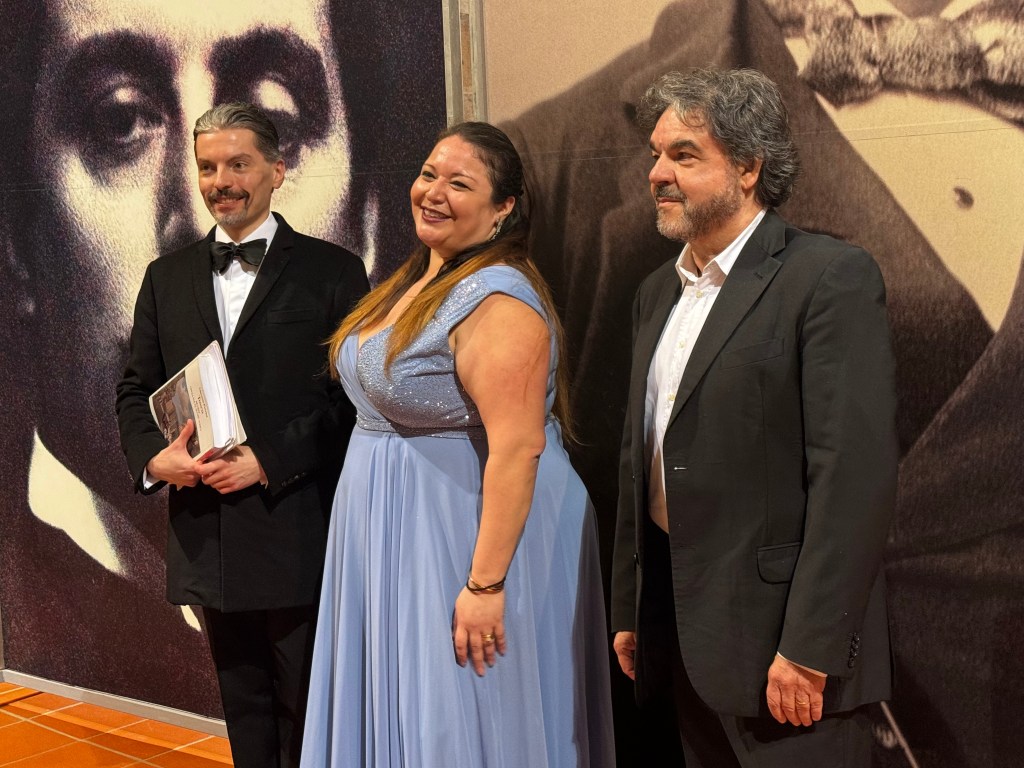
Today, this fortified town has become a hub for culture. In the warmer months, the Lucca Summer Festival takes centre stage, featuring top international artists. We personally had the pleasure of attending one of the nightly Puccini recitals held at various locations throughout the town.

As we strolled through the town, we discover ancient traditions and peculiarities still intact – many stores, for example, still carry their original shop signs, so you may think you are entering a butcher with a “ macellaio sign swinging from the doorframe, only to find shelves stacked high with designer sunglasses inside.

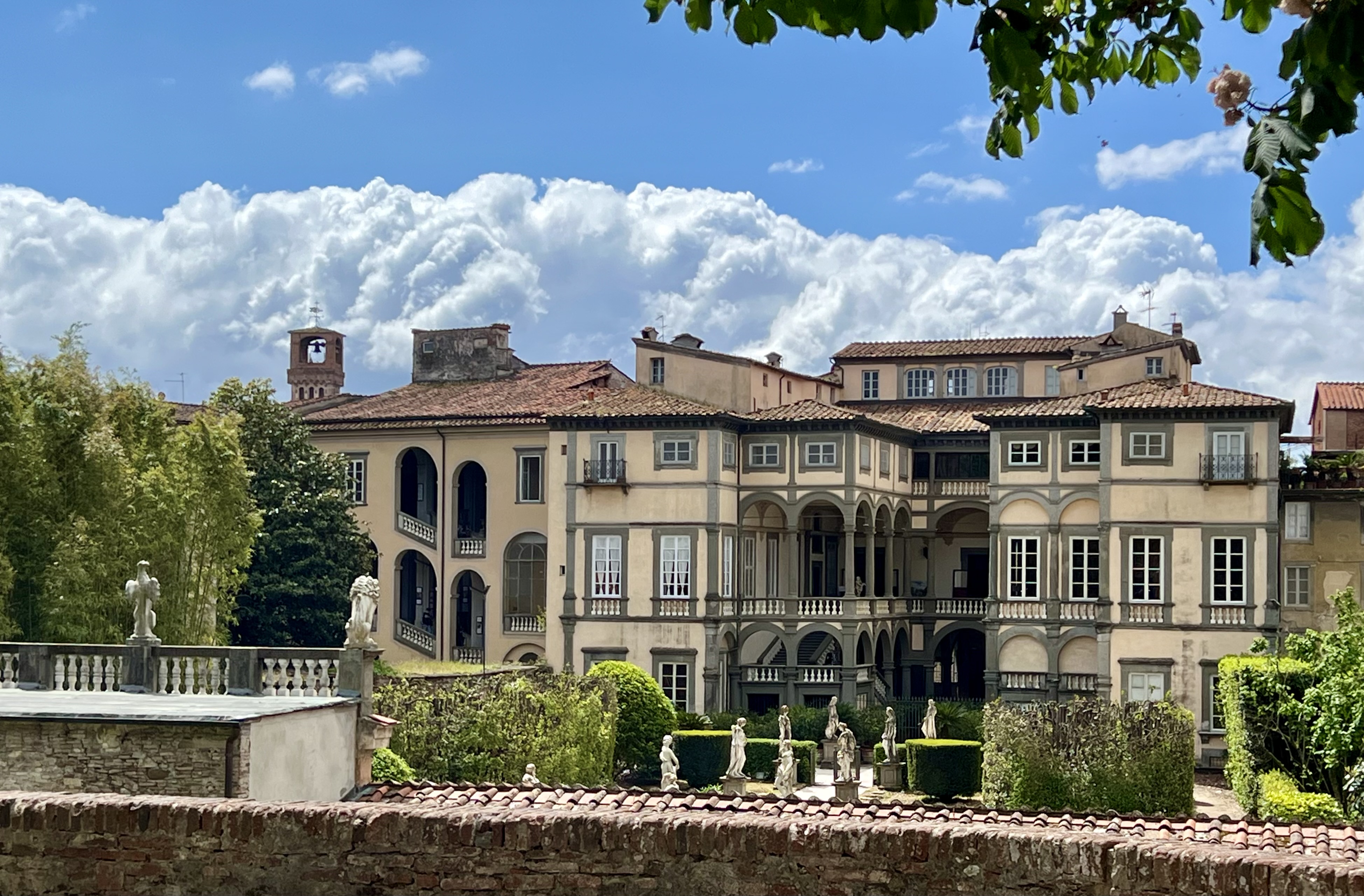
Many people were walking around the beautiful tree lined city walls while others were cycling around exploring breathtaking homes and gardens

After a month of traveling as a foursome, we will part ways. Meeting up with friends in Italy from around the USA was a beautiful experience. Jay and I will continue traveling to Poland for a few more weeks while Andy and Leilani return home.

2024 April 28-May 1: Cinque Terre

I have always been fascinated by train journeys, I envisioned them as relaxing and romantic. However, this notion would probably be true if you are not lugging luggage around and not trying to get on  a train heading to any one of the five villages in Cinque Terre. 

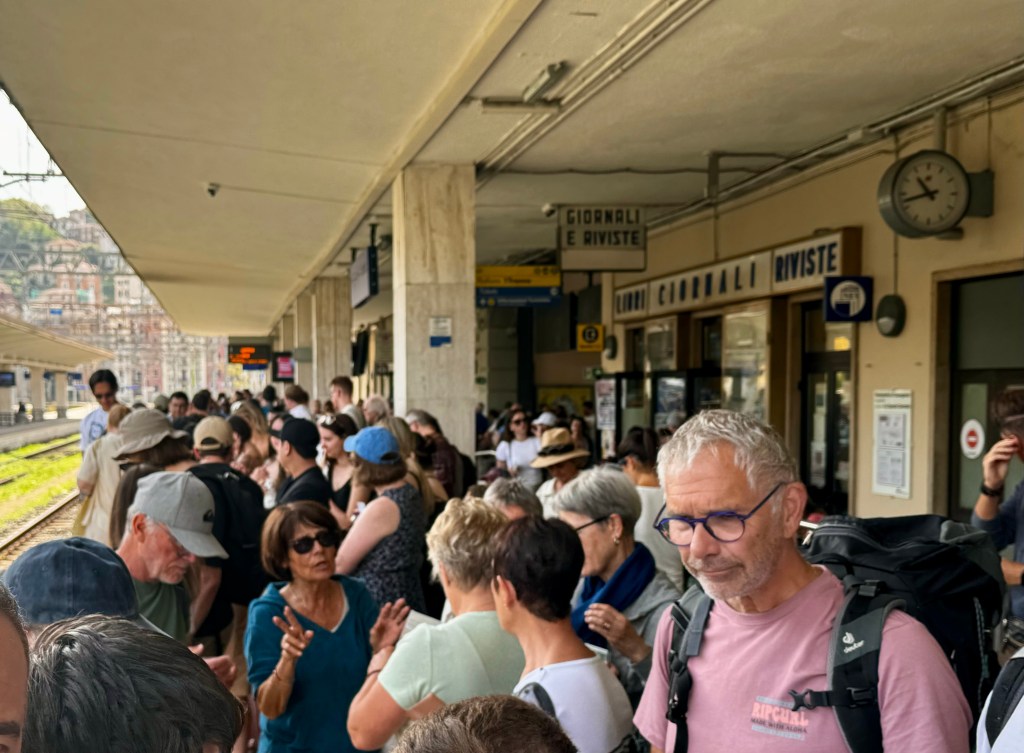
Stepping onto the train platform  in La Spezia, we encountered hundreds of people milling around, waiting for the (delayed) train; it was a mob scene. Cruise passengers — with their cruise-line-logo stickers and their whisper-system earbuds — stuck close to their guides, in big packs along the platform. Individual travelers did their best to weave through the crowds, filling in little gaps.

And then the train came  and everybody wanted on. If only I could have taken a photo but it was too much even for me. People pushed and pulled their travel partners into the tiny alcoves by the doors. Our group of four slipped in. I saw a tour guide at the door of the train, shouting to his group with exaggerated calm: “Don’t worry. Don’t worry. Just puuush your way in. Puuush in. I will be the last one.” Finally the last person pushed their way onto the train, we all clapped when the  doors shimmied shut, and we were on our way to Monterosso — where, about twelve minutes later, the entire contents of the train disgorged onto the platform at once, creating yet another log jam. The whole experience felt less like a vacation, and more like some bizarre, self-imposed refugee crisis which brought back memories of people clinging on to helicopters as they were being evacuated from war zones. 

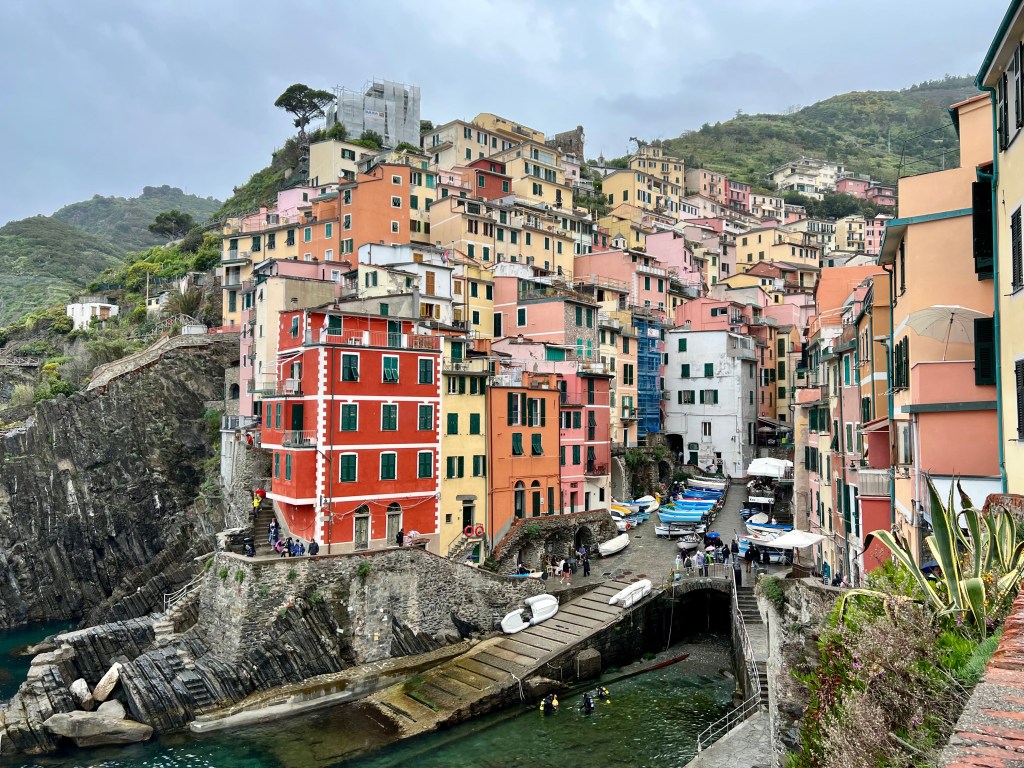
I have to admit that I have been dreaming of Cinque Terre for years, and not many other people seemed to be dreaming of the same place. A number of us were there, gazing up and doing our best to take in the picturesque villages, all the while being jostled by the throngs of people who were looking forward to finding a place to eat lunch and buy souvenirs.

After a couple hours of looking for the must see sights in Monterosso, we decided we would stop for lunch only to realize it was now approaching 2pm and everything was closing till dinner. Lucky for us, we found a place that remained open through the “siesta” time.

Monterosso to Vernazza Hike

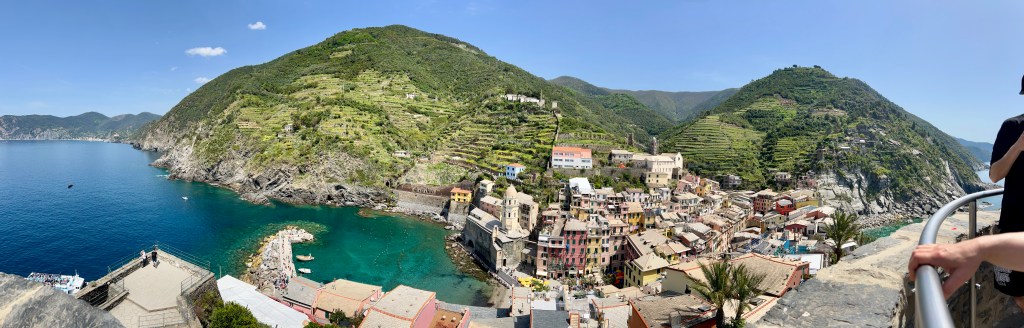
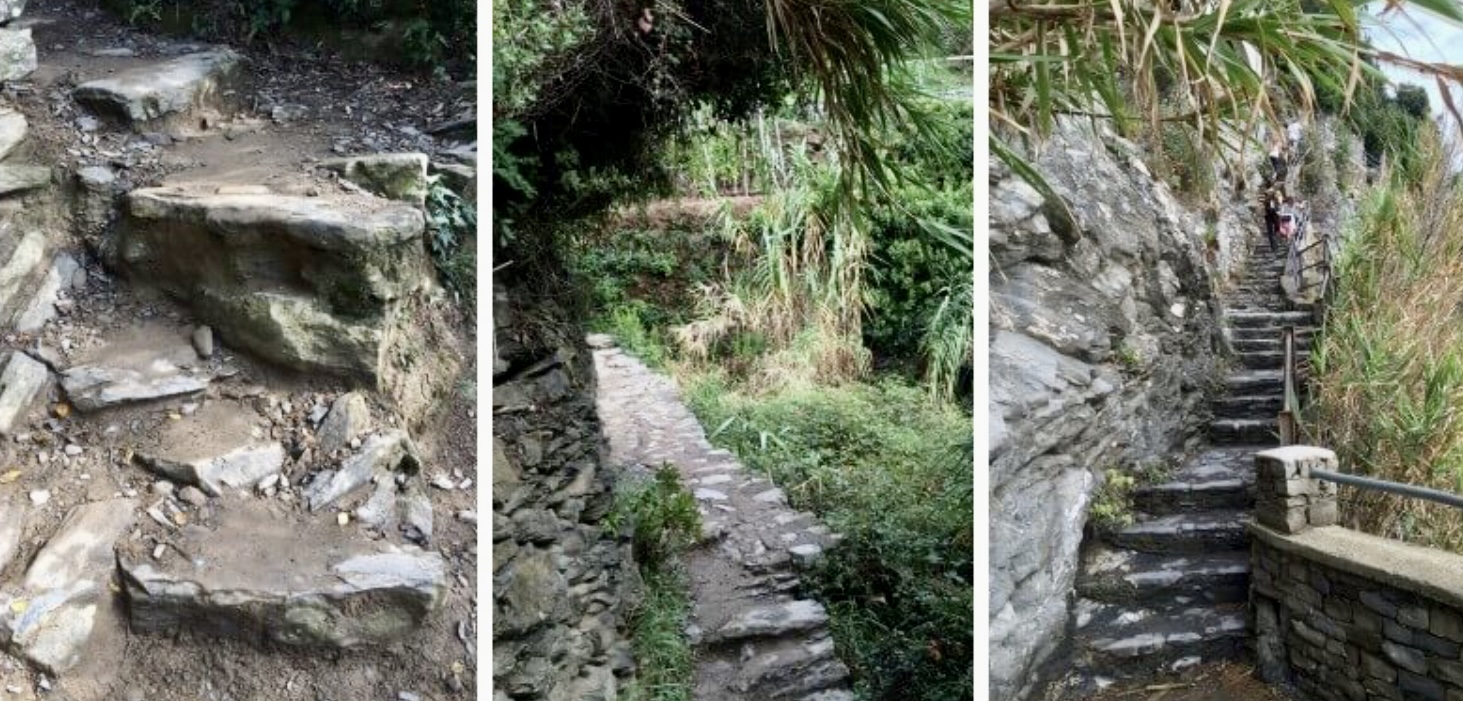
We enjoyed a nice relaxed lunch then we decided to continue our day by walking to the next village. After four hours of hiking with frogs and fireflies swarming around us we finally neared the end of the hike. It was completely dark, so we had to use our phone flashlights to navigate our way down. Of course no one could quite recall who came up with this brilliant idea to walk to the next village!

Later on, we would learn that this is one of the hardest parts of the climb from Monterosso to Vernazza. The route takes you up steep steps and along a gravel road with elevated views of the shore.

What a day to remember it turned out to be. I am so proud of us for completing the journey.

Will I return in the future? In fact, I really wish to go back someday so I can have the opportunity to see the towns in peace and quiet from a boat on the sea, where there are no stores and continue the beautiful hike we started.

2024 April 20-25: The Lakes & Much More

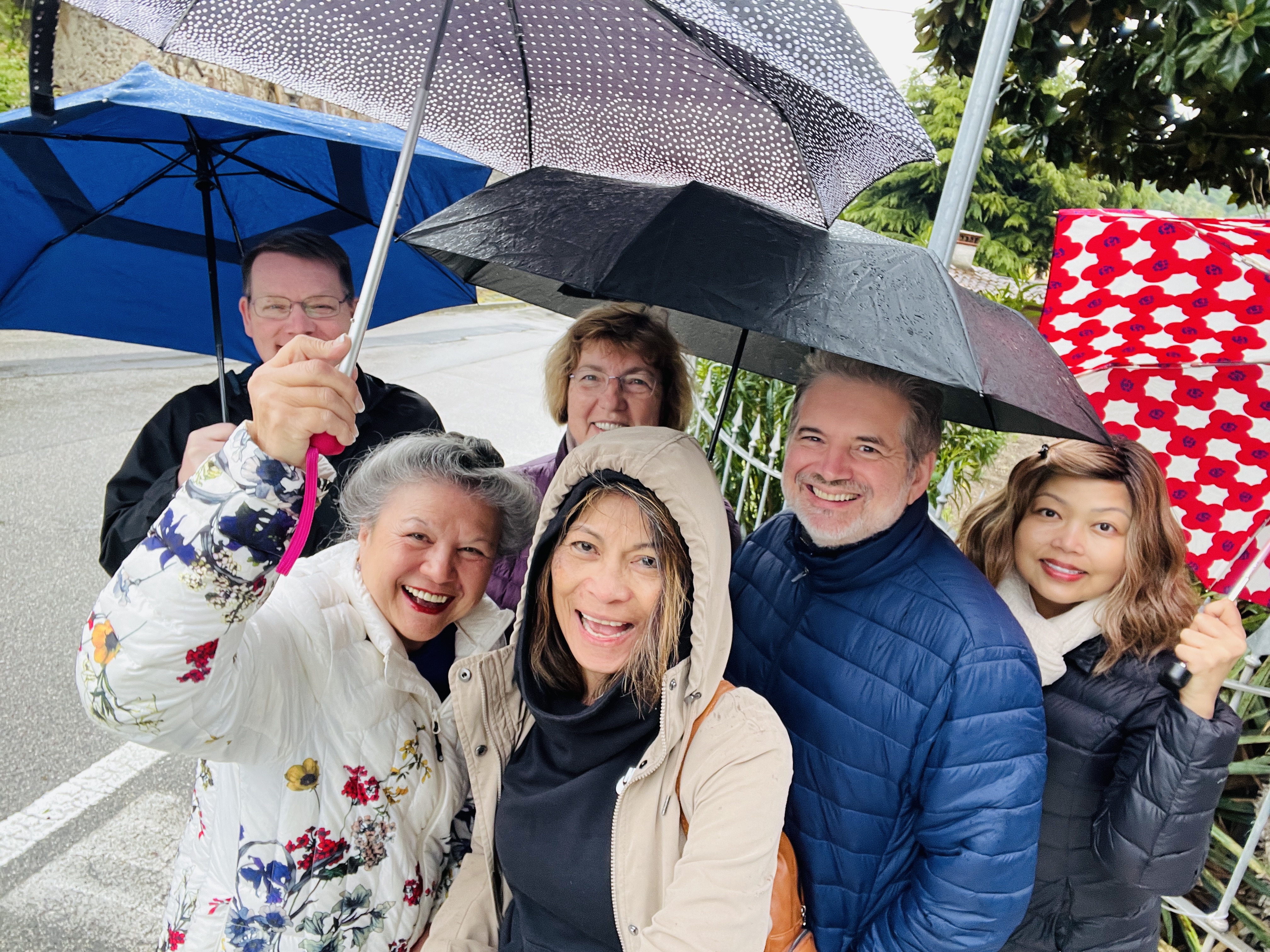
It was colder, windier, and rainier during our first few days on the Italian Lakes than it had been in Switzerland. The four of us who started out in Switzerland were well-prepared for winter, with everything from boots to coats. None of us let the poor weather stop us from catching up with each other and having a great time.

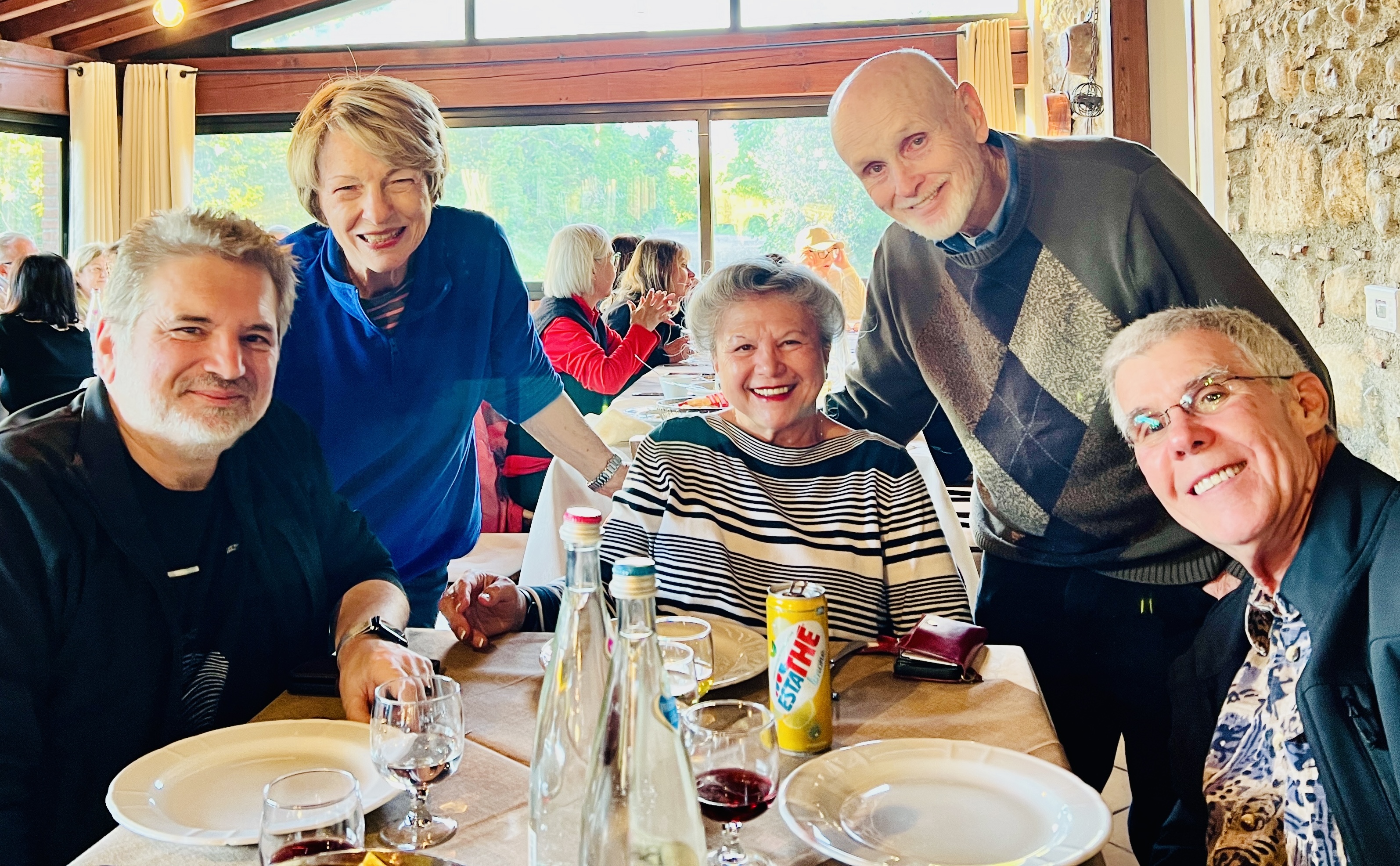
We had pasta of every kind, went to several quaint and beautiful towns such as Baveno, Mantua and Verona where we were once more able to leave a “lock” by Juliet’s balcony. We took a scenic drive through Italy’s Lake District . We visited enough churches that we could not go inside ABC (another bloody church).  We were able to enjoy boat rides at both Lake Maggiore and Lake Como but not as fortunate at Lake Garda. The rain and strong winds made the lake look more like the ocean than a lake and a leisurely boat ride was never going to work out.

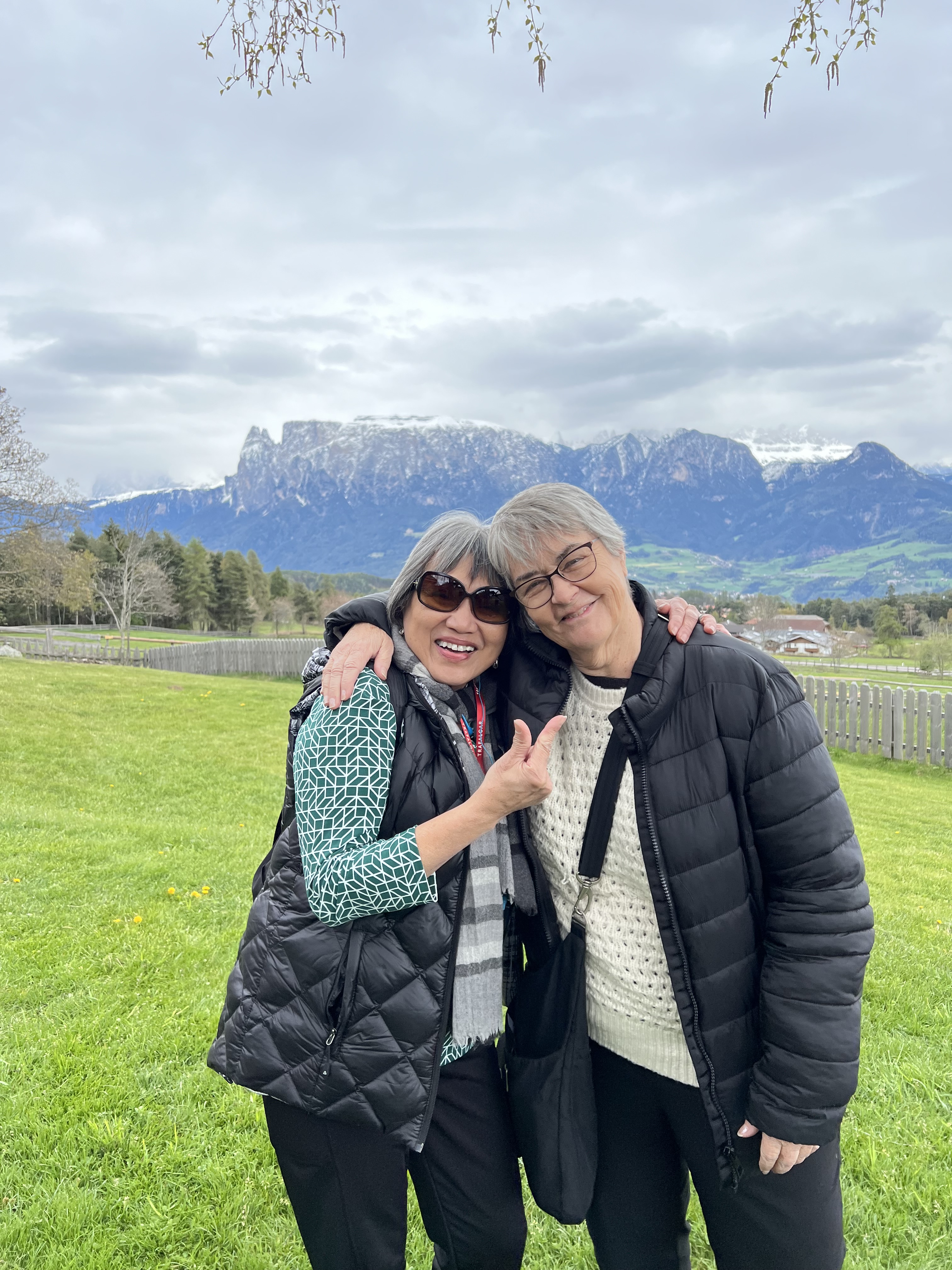
We admired the Dolomite mountains, took a train to the base of the cable car ride while being serenaded by a group of men who were apparently singing melancholy love songs and pleading with their mother to let them stay out late. 

We found ourselves in the midst of a Liberation Day commemoration that ended with marches, speeches and occasional clashes between police and pro-Palestinian groups who used the occasion to voice outrage at Israel’s war in Gaza.