Zakopane is a resort town in southern Poland, at the base of the Tatras Mountains. It’s a popular departure point for winter sports and summertime mountain climbing and hiking. Kasprowy Wierch and Gubałówka, reachable by cable car and funicular, are nearby ski destinations offering sweeping mountain views.

The town is also known for its turn-of-the-20th-century wooden chalets, symbols of Zakopane-style architecture.
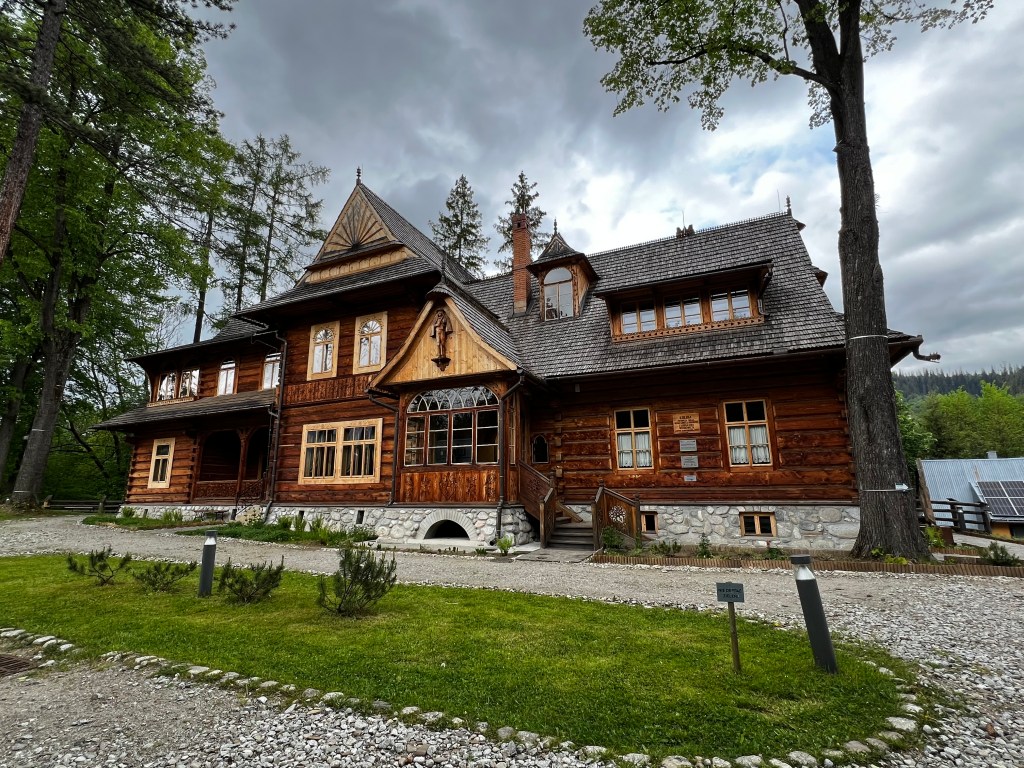
Zakopane Style or Witkiewicz Styleis an art style, most visible in architecture, but also found in furniture and related objects, inspired by the regional art of Poland’s hightland regions, most notably Podhale. Drawing on the motifs and traditions in the buildings of the Carpathian Mountains, this synthesis was created by Stanisław Witkiewicz who was born in the Lithuanian village of Pašiaušė, and is now considered to be one of the core traditions of the Goral people.

Sanktuarium Matki Bożej Fatimskiej w Zakopanem (The Sanctuary of Our Lady of Fatima in Zakopane)
The oldest part of the complex, the chapel of the Immaculate Heart of Virgin Mary, was built in 1951, with the statue of Our Lady of Fatima located inside. It was given to cardinal Stefan Wyszynski by the bishop of Fatima and placed in the chapel in 1961. On 15th of October 1961, Karol Wojtyla, later Pope John Paul II and bishop of Krakow at that time, consecrated the chapel and the statue.The church you see today was was created in gratitude for saving Karol Wojtyla’s life in the unsuccessful assassination attempt on 13th of May 1981. It was consecrated by Pope John Paul II in June 1997 during his sixth pilgrimage to Poland.

This was another stop that I just wished we had more time to explore!
 World Blog