Gdańsk (Danzig in German) is a port city on the Baltic coast of Poland. At the center of its Main Town, reconstructed after WWII, are the colorful facades of Long Market, now home to shops and restaurants. Nearby is Neptune Fountain, a 17th-century symbol of the city topped by a bronze statue of the sea god. Gdańsk is also a center for the world’s amber trade; boutiques throughout the city sell the ossified resin.

Daniel Gabriel Fahrenheit was born in Gdańsk. Fahrenheit invented thermometers accurate and consistent enough to allow the comparison of temperature measurements between different observers using different instruments.Fahrenheit is also credited with inventing mercury-in-glass thermometers. I’m sure I’m not the only one who remembers those things!
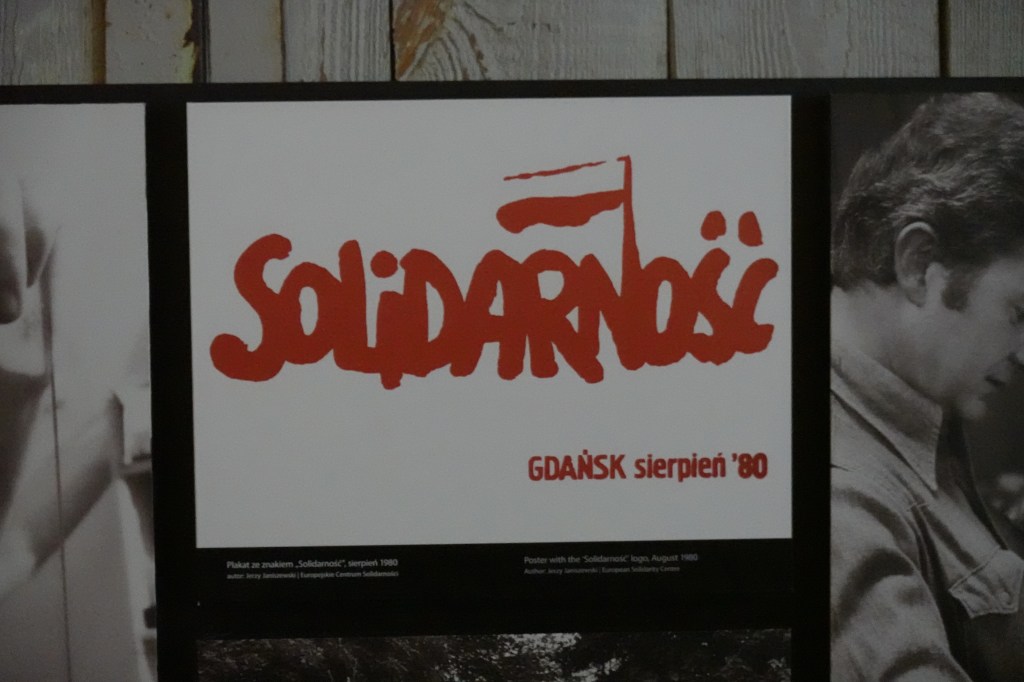
The European Solidarity Center is a museum and library devoted to the history of Solidarity, the Polish trade union and civil resistance movement, and other opposition movements of Communist Eastern Europe. It opened on 31 August 2014.

The Castle of the Teutonic Order in Malbork, commonly known as Malbork Castle, is a 13th-century castle complex located in the town of Malbork. It is the largest castle in the world measured by land area and a UNESCO World Heritage Site. It was originally constructed by the Teutonic Order, a German Catholic religious order of crusaders in the form of an Ordensburg fortress and named Marienburg in honor of Mary, the mother of Jesus.
Kwaśne Jabłko (Sour Apple)
We enjoyed a delicious Be My Guest lunch at a farm called Kwaśne Jabłko (Sour Apple), an organic farm and lodge tucked away from roads, in the Pasłęka River Valley. I always look forward to the Be My Guest stop and I must say that this will be on my top 10 favorites.

I wish we could stay here longer.
 World Blog